A.I. PRIME - Article
Agentic AI vs Traditional RPA: Which Automation Approach Wins for Your Business
Compare RPA vs agentic AI for your automation strategy. Learn which approach wins on cost, scalability, and ROI for your business. | RPA vs Agentic AI: Choose Your Automation Winner
Your automation strategy isn't just a technology decision - it's a competitive one. Enterprise leaders today face a fundamental choice: continue investing in traditional Robotic Process Automation (RPA), or adopt agentic AI systems that learn, adapt, and make autonomous decisions. This guide cuts through the hype and gives you a practical framework to evaluate both approaches across capability, cost, scalability, and organizational impact, so you can align automation with your actual business outcomes.
The Core Difference: Task Execution vs Outcome Automation
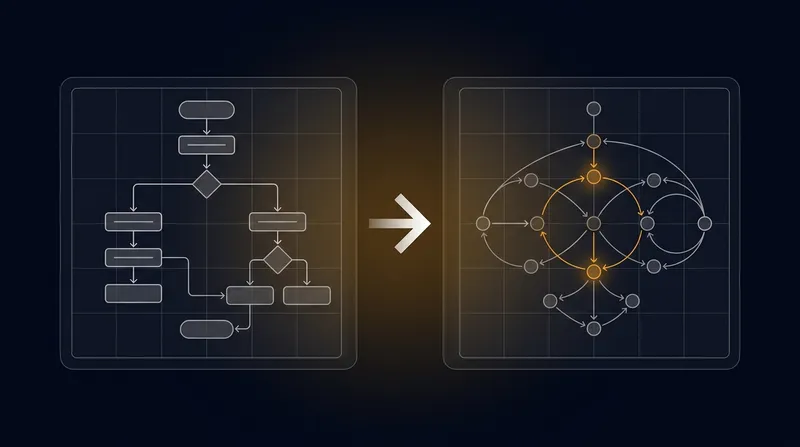
Traditional RPA operates on a simple principle: if A happens, then do B. Every time. Predictably. A bot follows explicit instructions - extract data, look up a record, send a response. This deterministic approach works brilliantly for high-volume, low-variation work like invoice processing or data entry. The bot cannot adapt, cannot learn, and cannot handle unexpected variations without human intervention or code redeployment. Learn more in our post on Agentic Networks vs Traditional RPA: A Comparative Framework for Decision-Makers.
Agentic AI systems work differently. They perceive their environment, evaluate options, and take autonomous action toward defined objectives. An agentic system can handle ambiguity, learn from real-world interactions, and dynamically adjust its approach based on feedback and changing conditions. Rather than executing a pre-programmed sequence, an agent reasons through a problem, considers multiple pathways, and selects the optimal action - sometimes in milliseconds.
The practical difference matters enormously. In customer support, an RPA bot extracts ticket data, looks up the customer, and sends a template response. An agentic system analyzes customer history, sentiment, business value, and available solutions - then autonomously selects the best resolution pathway, escalates intelligently, or composes a personalized response adapted to the customer's communication style and urgency.
The fundamental shift from RPA to agentic AI represents a move from task automation to outcome automation. Traditional bots execute tasks; agentic networks orchestrate outcomes across complex, interconnected business processes.
This distinction matters profoundly for enterprises managing complex, variable, or knowledge-intensive processes. Where RPA requires extensive upfront design and ongoing maintenance, agentic AI solutions improve through exposure to real-world scenarios. They handle edge cases more gracefully, require fewer manual interventions, and scale across increasingly sophisticated workflows without proportional increases in development effort.
What Each Approach Actually Delivers
Task Automation and Process Coverage
Traditional RPA excels within its designed scope. When workflows are clearly defined and variations are minimal, RPA delivers fast implementation and reliable execution. Insurance claim intake, accounts payable processing, and IT ticket routing are canonical RPA use cases - high-volume, low-variation processes where rule-based automation delivers immediate value. Learn more in our post on When to Choose Agentic AI Over Traditional Automation: A Founder's Decision Framework.
But RPA's capability ceiling becomes apparent quickly. Claims adjudication requires evaluating medical records, policy language, precedent, and claimant circumstances - tasks requiring reasoning, not just rule execution. Sales teams need to prioritize prospects based on fit, timing, and competitive context; a rigid RPA workflow cannot replicate this intelligence.
Agentic AI solutions handle both structured and unstructured work. They process natural language, interpret images, reason through ambiguous scenarios, and make nuanced decisions. An agentic system manages customer inquiries that vary widely in tone, complexity, and required expertise. It analyzes contract language to identify risks, synthesizes data from multiple sources to inform strategy, or dynamically routes work based on real-time capacity and skill matching.
Learning and Adaptation
RPA systems are static learners. Once deployed, they execute their programmed logic until explicitly reconfigured. If a process changes - a new document format, an updated approval threshold, a shifted business rule - someone must identify the gap, redesign the workflow, test the changes, and redeploy. This cycle typically takes weeks or months, creating a lag between business need and automation capability.
Agentic AI solutions incorporate continuous learning loops. They observe outcomes, identify patterns, and refine their decision-making in real time. If a sales agent learns that certain prospect profiles convert better with a particular messaging approach, it adapts. If a procurement agent discovers that a new supplier offers better terms for certain categories, it factors that into future recommendations. This adaptive capability means your automation improves without constant manual intervention.
Adaptive automation isn't just faster - it's fundamentally more resilient. When business conditions shift, agentic systems adjust their strategies autonomously, whereas RPA systems require engineering effort to adapt.
Cross-Functional Orchestration
Traditional RPA typically automates within functional silos. One bot handles accounts payable; another manages HR onboarding; a third processes customer orders. Connecting these workflows requires integration logic, manual handoffs, or middleware - adding complexity and latency.
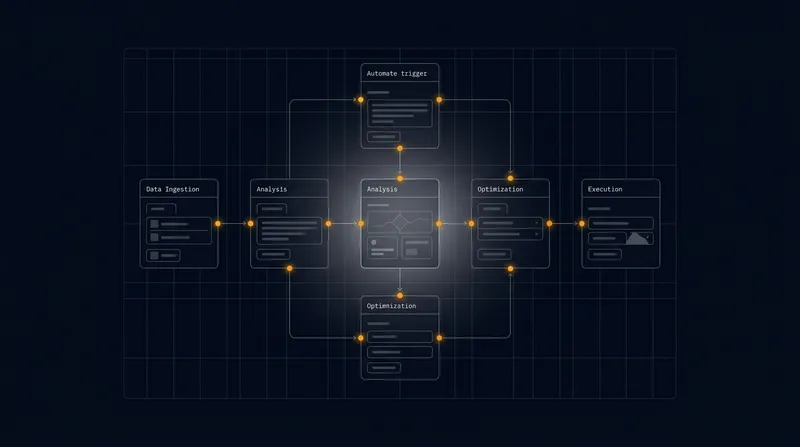
Agentic networks are designed for orchestration across functions. Multiple specialized agents collaborate toward shared business outcomes. A sales agent might identify a high-value opportunity and autonomously trigger a proposal agent, which coordinates with a pricing agent, which consults a fulfillment agent to confirm capacity. This cross-functional intelligence happens in real time, without human choreography, dramatically accelerating deal cycles and improving customer experience.
The Hidden Cost Drivers: Scalability and Maintenance
Implementation Timeline and Deployment Speed
RPA projects follow a predictable implementation curve. You conduct process discovery, design the bot logic, develop and test the automation, and deploy. For straightforward processes, this can happen in weeks. However, effort scales with process complexity. A moderately complex workflow involving multiple systems, conditional logic, and exception handling might require three to six months to develop and stabilize. Learn more in our post on Cost Modeling: How Agentic AI Lowers Total Cost of Ownership vs. Traditional Automation.
Agentic AI solutions often demonstrate faster initial deployment for complex processes because they don't require exhaustive upfront design. Rather than mapping every possible decision tree, you define objectives and guardrails, then let the agent learn the optimal approach. Many agentic deployments show measurable value within days or weeks, even for sophisticated workflows. The deployment model is iterative, with continuous refinement rather than a single go-live event.
The Maintenance Burden Problem
RPA systems accumulate technical debt rapidly. Each process change, system upgrade, or business rule adjustment requires code modifications. Over time, a large RPA estate becomes brittle. A single system integration change can cascade through dozens of bots, requiring regression testing and redeployment. Many enterprises report that 30 - 40 percent of RPA development effort goes toward maintaining existing bots, not building new automation.
This maintenance burden stems from RPA's fundamental architecture. Bots are tightly coupled to specific system interfaces, data formats, and business logic. When any of these change, the bot breaks and requires manual repair. At scale, managing hundreds of bots across evolving systems becomes operationally expensive and organizationally complex.
Agentic AI solutions decouple logic from implementation details. An agent's reasoning about how to route a customer inquiry is separate from the specific CRM system it uses to look up customer data. When the CRM interface changes, the agent continues functioning - only the data connector requires updating. This separation of concerns dramatically reduces maintenance overhead and makes systems more resilient to change.
The maintenance cost difference between RPA and agentic AI compounds over time. Enterprises with mature RPA deployments often spend more maintaining existing bots than building new ones. Agentic systems reverse this ratio.
Scaling Across the Enterprise
RPA scales linearly with effort. Each new process requires a new bot, new development, new testing, new deployment. A large enterprise might have hundreds of bots, each maintained by specialists who understand its specific logic and dependencies. This creates organizational bottlenecks - the RPA team becomes a constraint on business agility.
Agentic networks scale exponentially with capability. New agents leverage existing agents' capabilities, shared knowledge bases, and common infrastructure. A sales agent and a customer success agent can both use the same data orchestration layer, the same customer intelligence models, and the same communication protocols. You're not replicating effort for each new process - you're extending a connected ecosystem.
This scaling advantage becomes critical at enterprise scale. Organizations with 50+ active RPA bots often find themselves in an operational trap: they've achieved significant automation, but the cost and complexity of managing the estate prevents further expansion. Agentic networks break this trap by making incremental additions less costly and more powerful.
Governance, Control, and Risk Management
Transparency and Auditability
RPA systems offer strong auditability because they execute deterministic logic. You can trace exactly why a bot made a decision - it followed rule X, which triggered action Y. This transparency is valuable for compliance, especially in regulated industries like finance and healthcare. Auditors understand RPA logic because it mirrors human decision-making rules.
Agentic AI systems require more sophisticated governance frameworks. An agent might recommend a course of action based on pattern recognition across thousands of data points - reasoning that's mathematically sound but not easily explainable in plain language. This opacity creates regulatory and ethical challenges, particularly in high-stakes domains like credit decisions, medical recommendations, or legal determinations.
However, this challenge is addressable through proper governance architecture. Modern agentic AI solutions incorporate explainability features that show which factors influenced a decision, confidence levels, and alternative options the agent considered. A well-governed agentic system provides transparency comparable to RPA, with the added benefit of capturing the reasoning behind decisions.
Control and Guardrails
RPA's rule-based nature makes control straightforward. You define the rules; the bot executes them. If you want to prevent certain actions, you simply don't include them in the logic. This binary control model is easy to understand and audit.
Agentic systems require more nuanced control. You can't simply prohibit actions - you must teach the agent to avoid them through constraints, incentives, and learned preferences. This requires investment in governance infrastructure: defining acceptable action boundaries, establishing escalation triggers, implementing real-time monitoring, and creating feedback loops that reinforce desired behaviors.
The upside is that well-designed agentic governance is more flexible and adaptive than RPA rules. Rather than hardcoding "never approve orders over $50,000," you can define a framework: "agents may approve orders up to their authority limit, which varies by supplier risk profile, customer relationship value, and market conditions." The agent learns to navigate this framework, adapting to real-world complexity in ways RPA cannot.
Governance in agentic systems shifts from rigid rule enforcement to guided autonomy. Instead of "do this, not that," you're establishing principles: "optimize for customer satisfaction while maintaining compliance and cost discipline." Agents learn to balance these principles in context.
Compliance and Regulatory Considerations
RPA's deterministic nature appeals to compliance teams. Financial regulations like SOX, healthcare requirements like HIPAA, and data protection laws like GDPR are easier to satisfy with systems that follow explicit, auditable rules. You can demonstrate compliance by showing the rules, the execution logs, and the outcomes.
Agentic AI introduces new compliance considerations. Regulators increasingly scrutinize algorithmic decision-making, particularly in areas affecting customers or stakeholders. You must demonstrate that your agent's decisions don't discriminate, don't create unfair outcomes, and remain within legal and ethical bounds. This requires robust monitoring, bias detection, and intervention mechanisms.
That said, agentic AI can actually improve compliance in some domains. An agent trained on regulatory requirements can flag potential violations in real time, something RPA cannot do. A procurement agent can autonomously ensure supplier diversity compliance, vendor risk management, and contract adherence - all while maintaining full auditability and escalation protocols.
Total Cost of Ownership: Where the Numbers Diverge
Initial Implementation Costs
RPA typically requires lower upfront investment for straightforward, well-defined processes. A simple data entry automation might cost $20,000 - $50,000 to implement. You pay for software licenses, development effort, and testing. The costs are predictable and bounded.
Agentic AI solutions often require higher initial investment because they involve more sophisticated technology, more specialized expertise, and more comprehensive planning. However, this upfront cost is justified by faster deployment of complex processes and lower ongoing maintenance. A complex workflow that would take six months and $200,000 in RPA development might take eight weeks and $150,000 with agentic AI, while requiring 60 percent less ongoing maintenance.
Operating and Maintenance Costs
RPA's cost structure is deceptively attractive initially but becomes problematic at scale. A single bot might cost $5,000 - $10,000 annually to maintain (licenses, monitoring, updates). But a 100-bot estate costs $500,000 - $1,000,000 yearly - and that's before accounting for the development effort required to adapt bots to process changes, system updates, or business evolution.
Agentic systems have different economics. The per-agent maintenance cost is lower because agents are more self-sufficient and require less manual intervention. A 100-agent network might cost $300,000 - $600,000 annually, including platform fees, monitoring, and governance infrastructure. More importantly, the cost curve flattens as you add agents - each new agent leverages existing infrastructure and shared capabilities, avoiding the linear cost escalation of RPA.
Return on Investment Timeline
RPA typically delivers ROI within 6 - 12 months for well-scoped projects. If you automate a process that costs $100,000 annually to run manually, and the RPA solution costs $40,000 to build and $10,000 yearly to maintain, you break even in about five months and achieve strong ROI thereafter.
Agentic AI solutions can deliver ROI even faster for complex processes because they achieve higher automation rates with less manual exception handling. An agentic sales agent might handle 80 percent of customer inquiries autonomously, versus 40 percent for RPA, because it can reason through ambiguous situations. This higher autonomy rate translates to faster value realization. Additionally, the learning and adaptation capabilities mean ROI improves over time - the agent becomes more efficient and effective as it gains experience.
The ROI comparison flips when you consider multi-year horizons. RPA delivers faster initial returns but hits a plateau as maintenance costs grow. Agentic solutions require more patience initially but compound value over time as the network matures and maintenance costs remain flat or decline.
Hidden Costs and Risk Factors
RPA projects frequently encounter hidden costs: process discovery takes longer than expected, exception handling requires more logic than anticipated, system integrations prove more complex, and ongoing maintenance demands exceed initial projections. Many RPA implementations end up 20 - 40 percent over budget.
Agentic AI projects face different risks. The primary hidden cost is governance and oversight - building the infrastructure to monitor agents, detect anomalies, and intervene when necessary. Organizations that underestimate governance requirements often face operational surprises: agents making unexpected decisions, edge cases causing problems, or compliance issues emerging after deployment. However, these costs are typically lower than RPA maintenance overruns because they're addressed through infrastructure investment rather than ongoing development effort.
System Integration and Data Orchestration
Connecting to Legacy Systems
Both RPA and agentic AI must integrate with legacy systems - ERPs, CRMs, HCMs, and custom applications. RPA handles this through screen scraping, API calls, and database connections. The integration approach is straightforward: the bot connects to the system interface and executes actions as a user would.
This approach works but is brittle. When the legacy system's interface changes - even cosmetic UI updates - the RPA bot breaks. For systems without APIs, RPA relies on screen scraping, which is fragile and slow. Maintaining integrations across dozens of legacy systems becomes a significant operational burden.
Agentic AI solutions use more sophisticated integration patterns. Rather than bots mimicking user actions, agents interact with systems through semantic understanding. An agent understands that it needs to "retrieve customer account status," and it can accomplish this through the CRM API, a legacy database query, or a web service - adapting its approach based on what's available. This flexibility makes agentic systems more resilient to system changes.
Data Orchestration and Real-Time Insights
RPA typically moves data from point A to point B - extracting from one system, transforming it, and loading it into another. This works for batch processes but struggles with real-time, multi-source data requirements. If a process needs to correlate customer data from the CRM, transaction data from the ERP, and behavioral data from the analytics platform, RPA requires complex orchestration logic.
Agentic AI solutions excel at data orchestration. They can simultaneously query multiple data sources, synthesize insights, and act on the integrated view. A sales agent can access customer history, account status, open opportunities, and market intelligence in real time, then make intelligent decisions about next steps. This real-time, multi-source intelligence is difficult for RPA to achieve.
This difference becomes critical in fast-moving business contexts. RPA might identify that a customer is at risk of churn, but by the time it processes the data and triggers an action, the customer has already left. An agentic system detects the risk signal in real time and autonomously initiates a retention conversation - potentially saving the relationship.
Organizational Readiness and Skills Requirements
Team Structure and Expertise
RPA projects require specialized RPA developers who understand bot logic, system integration, and process design. These skills are relatively narrow - a developer proficient in a particular RPA platform can be productive quickly. However, RPA expertise doesn't transfer easily to other domains. An RPA developer isn't necessarily a strong software engineer or data scientist.
Agentic AI solutions require broader expertise. You need AI specialists who understand machine learning, data science, and reasoning systems. You need integration architects who can design data flows and system connectivity. You need business analysts who can define agent objectives and guardrails. The team is more diverse but requires deeper technical sophistication.
However, agentic systems are more accessible to business teams. Because agents can learn from examples and feedback, business users can contribute to training and refinement without writing code. A sales manager can show an agent examples of good customer interactions, and the agent learns. This democratization of automation is a significant advantage over RPA, where business users depend entirely on developer availability.
Change Management and Organizational Adoption
RPA is conceptually straightforward - it automates tasks that humans currently perform. Change management is relatively simple: show people that the bot does the work faster and more reliably, and they accept it. Resistance typically comes from job security concerns, which organizations address through redeployment and retraining.
Agentic AI systems introduce more fundamental change. Rather than automating tasks, they're automating decision-making and judgment. This can trigger deeper organizational resistance because it challenges how people understand their roles and expertise. A loan officer might accept an RPA bot handling paperwork but feel threatened by an agent making approval recommendations.
Successful agentic AI adoption requires more sophisticated change management. You must reframe automation as augmentation - agents handle routine decisions, freeing humans to focus on complex, high-value work. You must involve affected teams in defining agent behavior and guardrails. You must demonstrate that agents improve outcomes, not just reduce headcount. Organizations that invest in this change management see faster adoption and better results.
Real-World Performance Scenarios
High-Volume, Low-Variation Processes
In scenarios like invoice processing or data entry, where volume is high and variation is minimal, RPA delivers excellent value. A well-designed RPA solution processes thousands of invoices daily with 99+ percent accuracy, at a fraction of manual cost. The process is stable, predictable, and requires minimal maintenance. For this use case, RPA is the pragmatic choice.
Agentic AI could handle the same work but would be overengineered. You'd pay for capabilities you don't need. However, if invoice processing involves judgment calls - determining the correct cost center based on context, flagging suspicious amounts, or routing to different approvers based on vendor risk - then agentic AI's reasoning capabilities become valuable.
Complex, Variable, Knowledge-Intensive Processes
Consider a customer support scenario where inquiries vary widely: some are simple password resets, others are complex technical troubleshooting, still others are complaints requiring empathy and escalation judgment. RPA struggles here because it requires separate bots for each inquiry type, and the logic for classifying inquiries is fragile.
An agentic system excels in this environment. A single agent understands customer intent, assesses complexity, determines if it can resolve the issue, and routes appropriately. The agent learns from interactions - discovering that certain customer profiles prefer detailed explanations, or that particular product versions have common issues. Over time, the agent becomes more effective and requires less human intervention.
Cross-Functional, Outcome-Oriented Processes
Sales processes exemplify this category. A successful sale requires coordinating multiple functions: discovery, proposal generation, pricing, contract review, fulfillment planning, and customer onboarding. RPA can automate individual steps - generating a proposal, sending a contract - but struggles to orchestrate the entire flow because it requires judgment about timing, prioritization, and exception handling.
An agentic network orchestrates the entire journey. A sales agent identifies opportunities, coordinates with a pricing agent to determine optimal terms, works with a fulfillment agent to confirm capacity, and manages the customer experience throughout. Each agent contributes specialized intelligence, and the network achieves outcomes that no individual bot could accomplish.
Decision Framework: Choosing Your Automation Path
Evaluation Criteria
To determine which approach aligns with your objectives, evaluate your automation opportunities across several dimensions:
- Process Variability: If processes are highly standardized with few exceptions, RPA is efficient. If processes involve judgment calls, conditional logic, or frequent variations, agentic AI is more suitable.
- Decision Complexity: Simple rule-based decisions favor RPA. Decisions requiring context, reasoning, or pattern recognition favor agentic AI.
- System Integration Scope: If you're integrating with one or two stable systems, RPA is straightforward. If you're orchestrating across multiple evolving systems, agentic AI is more resilient.
- Scalability Horizon: If you're automating a handful of processes, RPA is cost-effective. If you're building a large-scale automation estate, agentic AI's lower maintenance costs become advantageous.
- Learning and Adaptation Needs: If processes are static, RPA is sufficient. If you need continuous improvement and adaptation to changing conditions, agentic AI is essential.
- Governance Requirements: If compliance requires transparent, auditable rule-based decisions, RPA is aligned. If you can implement sophisticated monitoring and governance frameworks, agentic AI enables more flexible automation.
- Time Horizon: If you need quick wins on straightforward processes, RPA delivers faster initial ROI. If you're investing in long-term automation capability, agentic AI compounds value over time.
Hybrid Approaches
Many enterprises benefit from hybrid strategies. RPA handles high-volume, standardized processes where it excels. Agentic AI addresses complex, variable work where judgment and adaptation matter. The two approaches coexist effectively when deployed strategically.
A practical hybrid model: use RPA for the "easy automation" - data entry, routine transactions, simple routing. Invest in agentic AI for the "hard automation" - customer interactions, complex decision-making, cross-functional orchestration. Over time, as your agentic network matures and becomes more capable, you may find it cost-effective to migrate some RPA workloads to agents. But there's no requirement to do so - the best enterprises use each tool where it delivers the most value.
The key is intentionality. Don't default to RPA because it's familiar. Don't adopt agentic AI because it's trendy. Evaluate each automation opportunity against your specific requirements, constraints, and strategic objectives. The right choice varies by process, by organization, and by time horizon.
Getting Started: From Evaluation to Implementation
If you're evaluating automation approaches, start by auditing your current process landscape. Which processes are candidates for automation? For each, assess the criteria outlined above. You'll likely find a portfolio: some processes are ideal for RPA, others clearly benefit from agentic AI, and some may not be worth automating at all.
For RPA candidates, move forward with confidence. The ROI is clear, the technology is mature, and the implementation path is well-established. Focus on high-volume, low-variation processes where RPA delivers maximum value with minimal complexity.
For agentic AI candidates, start with a pilot. Choose a process that involves judgment, variability, or cross-functional coordination. Define clear success metrics - reduced manual effort, faster resolution, improved customer satisfaction, better decision quality. Build a small team with the right expertise. Deploy iteratively, gathering feedback and refining agent behavior continuously. Measure results rigorously.
The organizations winning with automation aren't choosing between RPA and agentic AI - they're building integrated automation strategies that deploy each technology where it delivers maximum value. That strategic clarity, combined with disciplined execution, is what drives measurable operational improvement.
Conclusion
The debate between agentic AI and traditional RPA isn't about declaring a winner - it's about understanding when and where each approach delivers maximum value. RPA remains a powerful, proven solution for high-volume, standardized processes where predictability and cost-efficiency are paramount. Agentic AI represents the next frontier, enabling organizations to automate complex, judgment-driven work that was previously beyond automation's reach.
Your competitive advantage lies not in choosing one over the other, but in building a thoughtful automation strategy that leverages both technologies strategically. Start by auditing your process landscape with clear eyes. Identify which processes are RPA-ready and which would benefit from agentic intelligence. Pilot agentic AI in areas where it can demonstrate tangible impact - customer interactions, complex decision-making, cross-functional workflows. Scale RPA where it excels, and watch as your agentic networks mature and expand their capabilities over time.
The organizations leading their industries understand that automation is not a one-time project but an evolving capability. They measure results rigorously, iterate continuously, and remain flexible as technology and business needs evolve. They avoid both the trap of over-investing in legacy automation approaches and the temptation to chase emerging technologies without clear business justification.
As you move forward, remember this: the right automation approach is the one that solves your specific business challenges most effectively. Whether that's traditional RPA, agentic AI, or a hybrid combination, success comes from intentional decision-making backed by rigorous execution. The future of automation belongs to organizations that master both technologies and deploy them with strategic precision.
Next step
Book the Opportunity Sprint