A.I. PRIME - Article
Autonomous Follow-ups: Automating Customer and Internal Escalations Without Losing Context
Learn design patterns for autonomous follow ups that preserve conversational and transactional context, use predictive scoring to prioritize actions, and.

Autonomous follow-ups are a practical bridge between intelligent agents and human teams for enterprise-grade service delivery. For Chief Digital Officers and technology leaders at mid to large enterprises, autonomous follow-ups unlock faster resolution, consistent customer experiences, and reliable internal escalations while preserving the context that makes every interaction meaningful. In this article we outline design patterns that keep conversational and transactional context intact across channels, show how predictive scoring prioritizes actions, and explain how to escalate to humans with full audit trails that preserve compliance and service quality. You will get tactical guidance for integration, governance checkpoints, and a measurable implementation roadmap that maps to ROI and operational KPIs.
This guide is written for decision makers who need resilient automation that integrates with legacy systems, scales across teams, and balances autonomy with control. You will find practical architectures, patterns for context persistence, prioritization models, escalation workflows, and governance controls that help your organization adopt autonomous follow-ups with confidence.
Why Autonomous Follow-ups Matter for Enterprise Operations
Autonomous follow-ups transform static workflows into living processes that react to events, surface relevant context, and act without constant human prompting. In customer service and internal operations, the difference between a routed task and an effective resolution is context. Autonomous follow-ups preserve conversation history, transaction metadata, and business rules so follow-up actions are precise and relevant. That reduces rework, shortens time to resolution, and improves customer satisfaction. Learn more in our post on Building Autonomous AI Agents for Customer Service Automation.
Decision makers often ask whether autonomous follow-ups introduce operational risk. The answer is yes when poorly designed, and no when built with layered safeguards. Good implementations pair controlled autonomy with composable agent playbooks and governed AI guardrails. The result is faster, safer automation that integrates into existing systems and respects compliance, audit, and security requirements. For teams focused on digital transformation, autonomous follow-ups help achieve rapid time to value by converting manual status checks and repetitive reminders into reliable, measurable outcomes.
Consider the common pain points autonomous follow-ups solve. Manual escalation suffers from lost context, inconsistent prioritization, and slow human handoffs. Autonomous follow-ups standardize context capture, apply predictive scoring to prioritize work, and route escalations to the right team with full audit trails. This combination keeps service quality high while reducing operational costs.
Core Design Patterns for Context-Preserving Autonomous Follow-ups
Preserving context is the single most important design requirement for autonomous follow-ups. Context breaks when there is no shared state across channels or when handoffs discard the nuance of past interactions. Below are proven patterns for capturing, persisting, and reusing context so an autonomous follow-up agent can behave intelligently across touch points. Learn more in our post on Best Practices: Designing Safe Reward Functions and Constraints for Autonomous Agents.
Unified Conversation and Transactional State
Design a unified state model that stores both conversational elements and transactional metadata. Conversational elements include utterances, agent prompts, and sentiment signals. Transactional metadata includes order numbers, case IDs, timestamps, SLA windows, and previous escalation attempts. A single source of truth allows autonomous follow-ups to reference the same state whether the follow-up is a chat message, email, phone callback, or ticket update.
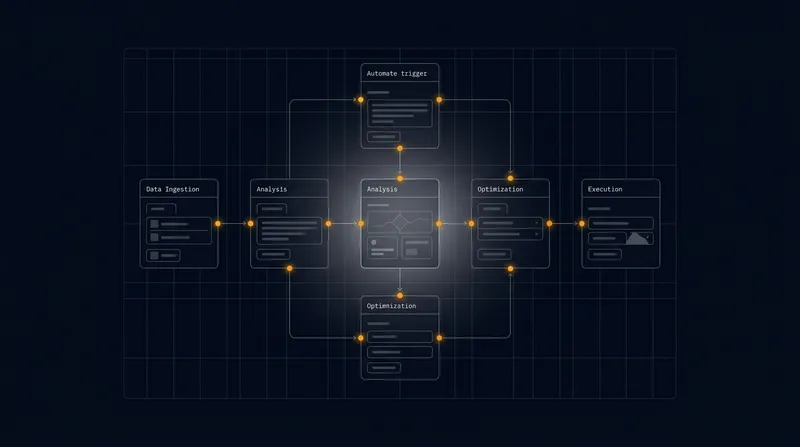
Implement the state model as a lightweight event-sourced timeline that appends events rather than overwriting context. Event sourcing preserves auditability and enables replay for debugging or training. With an event timeline, autonomous follow-ups can reconstruct intent, measure elapsed time between events, and apply business rules against a complete view of the interaction.
Context Enrichment Layers
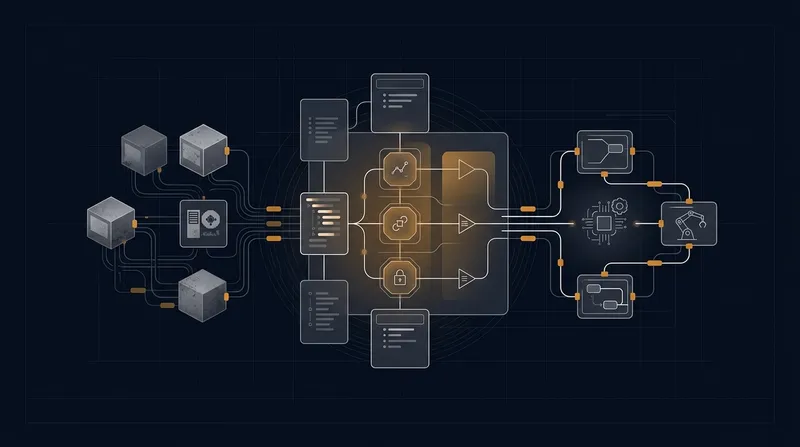
Enrich context with external data sources such as CRM records, billing systems, and product catalogs. Enrichment provides the domain signals that autonomous follow-ups use to decide next steps. For example, an unpaid invoice linked to a customer support request changes escalation priority. Enrichment services should run asynchronously and cache results to avoid latency during decisioning.
Use identity-aware enrichment that maps aliases and cross-channel identifiers to a single canonical entity. This prevents fragmented profiles that break context. When autonomous follow-ups query enrichment services, ensure that responses include provenance and timestamps so downstream decisioning knows how fresh the data is.
Composable Playbooks and Contextual Templates
Compose autonomous follow-ups out of modular playbooks and contextual templates. Playbooks define sequences of actions, conditional branches, and escalation rules. Templates define the language and data fields used for messages across channels. By separating logic from language, teams can update responses and escalation criteria without redeploying core automation. This pattern simplifies governance and reduces the risk of unintended behavior when scaling autonomous follow-ups.
Playbooks should be parameterized with context variables such as SLA risk, customer tier, and previous escalation attempts. Parameterization allows the same playbook to act differently for a high value account versus a standard account. This keeps actions precise and proportional to the business impact.
Predictive Scoring and Priority-based Action Selection
Predictive scoring is central to choosing which autonomous follow-ups to execute and when. Instead of executing follow-ups on a fixed cadence alone, score each open issue based on risk, value, and probability of resolution with automation. Predictive scoring turns a long queue of tasks into a ranked agenda that autonomous follow-ups can process in order of expected impact. Learn more in our post on Autonomous Agents to Fix Inefficient Business Processes: Case-Ready Services.
Scores should combine multiple signals. Typical inputs include elapsed time since event, customer segment, sentiment analysis, transaction value, SLA deadlines, historical resolution probabilities, and agent availability. Use an explainable scoring model to make prioritization transparent to stakeholders and auditors. Explainability helps when human operators review escalations and when governance needs to justify automated decisions.
Scoring Architecture
Implement scoring as a streaming service that ingests events and enrichments, computes a score vector, and persists results to the unified state model. Scores are recalculated on state changes so autonomous follow-ups always act on the latest information. Provide a configurable threshold layer so business owners can define when an autonomous follow-up should attempt an action and when it should instead escalate to human review.
Predictive scoring also supports experimentation. Run A B tests where autonomous follow-ups apply different thresholds and measure outcomes. Use controlled rollouts with monitoring to evaluate lift and ensure that scoring policies do not reduce service quality.
Escalation Patterns that Preserve Context and Accountability
Escalation is the safety valve for autonomous follow-ups. When automation cannot resolve an issue, it must hand off to a human with no loss of context. Escalation patterns must also preserve accountability, create transparent audit trails, and prioritize escalations intelligently so that the right humans see the right work at the right time.
Full Audit Trails and Forensic-ready Data
Every action performed by an autonomous follow-up must be recorded with context, inputs, outputs, confidence scores, and timestamps. Audit trails should include the exact state snapshot that triggered the action and links to enrichment sources. For compliance and root cause analysis, make audit logs queryable and immutable. Storing the event-sourced timeline alongside human annotations helps investigators and auditors reconstruct how a decision was made.
Audit logs are also critical for continuous improvement. Use aggregated audit data to retrain scoring models, refine playbooks, and identify failure modes. When an escalation occurs, the audit trail should make it effortless for a human to pick up, assess the situation, and act without reasking the customer for information.
Context-rich Handoffs and Inbox Integration
Design human handoffs as context-rich tickets or digest views. A digest should include a concise summary, the event timeline, relevant attachments, and suggested next steps generated by the automation. When autonomous follow-ups escalate, attach machine-generated diagnostics that explain what was tried, why it failed, and what data is missing. This reduces triage time and keeps SLAs tight.
Integrate escalations into existing collaboration tools and agent inboxes. Use priority flags and routing rules that match skills and capacity so humans receive escalations they can resolve quickly. For distributed teams, include location and local compliance annotations so the human responder has the necessary constraints upfront.
Governance, Safety, and Human-in-the-loop Controls
Balance autonomy and control with governance layers that are simple to operate. Governance for autonomous follow-ups focuses on policy enforcement, observability, and role-based permissions. Leaders must be able to inspect behavior, pause or reroute playbooks, and set boundaries for escalation criteria.
Guardrails and Policy Enforcement
Implement guardrails that prevent unsafe or noncompliant actions. Guardrails can block certain reply templates, require human approval for high risk actions, and enforce data handling policies for PII. Use policy-as-code to codify compliance checks and embed them in the execution path of autonomous follow-ups. That makes approval processes auditable and repeatable.
Policies should be editable by governance teams without the need for engineering intervention. Expose key policy parameters in a governance console where compliance officers can set thresholds, permitted channels, and escalation workflows. This empowers cross functional teams to own service quality.
Observability and Human Oversight
Observability tools should surface health metrics such as action success rates, escalation frequency, resolution time, and customer satisfaction. Dashboards that aggregate these signals allow leaders to make data driven decisions about parameter tuning for autonomous follow-ups. Embed alerting for anomaly detection so operators can intervene when automation behaves unexpectedly.
Human oversight is not a single mode. Provide a spectrum of oversight options from passive review to active approvals. For example, enable a mode where autonomous follow-ups propose messages but wait for human sign off for high value accounts. Gradually relax oversight as confidence in the system grows and as models and playbooks prove robust.
Implementation Roadmap for Enterprises
Rolling out autonomous follow-ups at scale requires a phased approach. The roadmap below is practical for Chief Digital Officers and their teams who must align cross functional stakeholders and legacy systems.
-
Discovery and Prioritization
Map high volume follow-up tasks and identify where context loss causes rework or escalations. Prioritize opportunities by expected ROI and feasibility. Select a pilot domain such as billing reminders or first level support where autonomous follow-ups can reduce manual effort.
-
Prototype and Playbook Design
Create modular playbooks for the pilot domain and design the unified state model. Include predictable failure paths and human escalation triggers. Run a closed pilot with a subset of accounts to validate assumptions.
-
Scoring and Policies
Build predictive scoring models using historical data and define governance policies. Validate model performance and explainability. Tune thresholds so autonomous follow-ups act where they are most effective.
-
Full Integration and Scale
Integrate with CRM, ticketing systems, and collaboration tools. Expand playbooks to additional domains and use feature flags to control rollout. Monitor KPIs and iterate on models and templates.
-
Continuous Improvement and ROI Tracking
Use live ROI dashboards to track savings, resolution time improvements, and customer satisfaction. Feed results back into model retraining and playbook updates to create a feedback loop that continually improves performance of autonomous follow-ups.
Throughout implementation, maintain clear governance and communication with stakeholders. Provide training for teams who will receive escalations and document the human experience for different escalation scenarios. This reduces resistance and accelerates adoption of autonomous follow-ups.
Operationalizing Escalations with Full Auditability
Operational excellence requires that escalations are traceable and that every handoff preserves context. Below are practical steps to ensure escalations remain efficient and auditable.
-
Immutable Event Timelines
Persist all automation actions and human interventions in an immutable event store. Use append only logs to ensure integrity and to support forensic analysis. Autonomous follow-ups should attach event references to escalations so humans see the full chronology.
-
Standardized Escalation Metadata
Define a minimal metadata schema for escalations. Include reason code, confidence score, elapsed SLA time, recommended next steps, and priority. Standardization enables downstream systems to consume escalations consistently.
-
Human Feedback Loop
Capture human annotations and resolutions as structured feedback. Feed these annotations back into training data for scoring models and playbook refinements so autonomous follow-ups improve over time.
When autonomous follow-ups escalate with rich context and clear metadata, human responders can act quickly and accurately. That preserves throughput and maintains service quality even as automation handles routine tasks.

Measuring Success: KPIs and ROI for Autonomous Follow-ups
Track a balanced set of metrics to measure the effectiveness of autonomous follow-ups. Focus on operational, financial, and customer experience indicators.
Key Performance Indicators
-
Resolution Time
Measure mean time to resolution for cases handled entirely by automation versus those requiring escalation. Autonomous follow-ups should decrease time to resolution for routine inquiries.
-
Escalation Rate
Monitor the proportion of cases escalated to humans. A healthy target depends on domain complexity. Use escalation rate in conjunction with outcome quality to avoid over optimizing for low escalation rates at the cost of poor service.
-
Customer Satisfaction
Collect satisfaction signals directly after automated interactions and after human resolutions. Use this to validate that autonomous follow-ups maintain service quality.
-
Operational Cost Reduction
Calculate labor hours saved and translate to cost reduction. Include costs of platform operations and governance when computing net ROI.
-
Model and Template Drift
Track degradation in model performance and template effectiveness. High drift rates signal the need for retraining and content updates to keep autonomous follow-ups reliable.
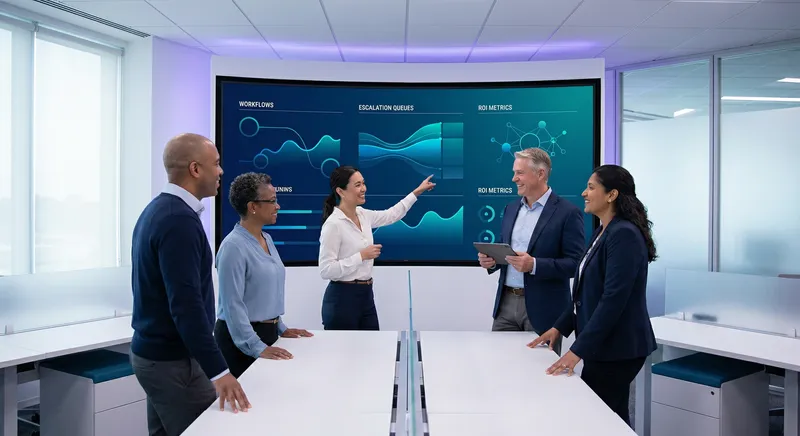
Use a live ROI dashboard that blends these indicators and presents them to stakeholders. Dashboards help leaders, including Chief Digital Officers and VPs of Operations, make informed decisions on scaling autonomous follow-ups.
Operational Examples and Industry Use Cases
Enterprises across sectors can apply autonomous follow-ups to reduce friction and improve outcomes. Below are focused examples that illustrate patterns and expected benefits.
Finance and Billing
Use autonomous follow-ups to manage past due invoices. An autonomous follow-up agent can check payment history, send a personalized reminder, attempt an automated retry, and escalate to collections with full audit trails if thresholds are crossed. Predictive scoring prioritizes accounts with high disruption risk so collections teams receive the most urgent cases first. The result is faster cash recovery and fewer manual outreach efforts.
Healthcare Operations
In healthcare, context is vital to patient safety. Autonomous follow-ups can confirm appointment details, collect previsit forms, and escalate incomplete or conflicting information to care coordinators. Enrichment from electronic health records and consent checks are mandatory governance steps. Audit trails capture every automated contact so compliance teams can verify that follow-ups complied with privacy and consent policies.
Technology and Support
For technical support, autonomous follow-ups can triage incidents, gather logs, and attempt standard remediation steps. If automation cannot resolve the issue, it escalates with a diagnostic digest, priority flag, and recommended next steps. This reduces L1 workload, shortens mean time to repair, and ensures human engineers receive context rich tickets that are ready for action.
Common Objections and How to Address Them
When presenting autonomous follow-ups to stakeholders, leaders will raise concerns about control, privacy, and integration. Here are concise rebuttals and practical mitigations.
-
Loss of Control
Mitigation: Offer human-in-the-loop modes and configurable governance consoles so stakeholders can adjust autonomy thresholds. Start with supervised automation and expand control as confidence grows.
-
Data Privacy and Compliance
Mitigation: Enforce policy-as-code, data minimization, and role based access. Maintain encrypted audit logs and consent tracking integrated into the state model.
-
Integration Complexity with Legacy Systems
Mitigation: Use adapters and event driven routing to interface with legacy APIs. Implement enrichment caches to reduce load and use a composable agent layer that isolates core logic from adapters.
-
Model Drift and Accuracy
Mitigation: Implement continuous monitoring and retraining pipelines. Use human feedback loops to collect labeled examples for recurrent improvement of autonomous follow-ups.
Checklist for Deploying Autonomous Follow-ups
Before you roll out autonomous follow-ups, complete this practical checklist to ensure readiness and governance alignment.
- Map follow-up use cases and prioritize by ROI potential.
- Design a unified state model and event timeline for context.
- Build modular playbooks and contextual templates.
- Implement predictive scoring with explainability.
- Define escalation metadata and audit trail requirements.
- Codify guardrails as policies and expose them to governance teams.
- Integrate with CRM, ticketing, and collaboration systems via adapters.
- Run a closed pilot and measure KPIs such as resolution time and escalation rate.
- Iterate on templates, scoring, and playbooks using human feedback.
- Use ROI dashboards to make the case for scaling autonomous follow-ups across the enterprise.

Actionable Next Steps for A.I. PRIME Customers
Leaders ready to adopt autonomous follow-ups should begin with a focused pilot aligned to a clear ROI metric. A.I. PRIME helps teams design composable playbooks, deploy predictive scoring, and integrate governance controls so autonomous follow-ups deliver measurable outcomes. Our services include workflow design, agent network deployment, governance integration, and live ROI dashboards to accelerate adoption and ensure continuous improvement.
Start by engaging in a rapid discovery workshop with stakeholders from operations, IT, and compliance. Identify top follow-up processes, sketch a unified state model, and run a two to four week pilot. Use the pilot to validate predictive scoring, template effectiveness, and human handoff workflows. Collect audit trails and success metrics to build the business case for scale.
For technology leaders, a pragmatic implementation plan reduces organizational friction. Use feature flags to enable progressive release, and provide training for agents who will receive escalations. Maintain a governance console so compliance officers can review and adjust policies without engineering intervention. These steps reduce risk and speed time to value for autonomous follow-ups.
Conclusion
Autonomous follow-ups are a foundational capability for enterprises that want to scale intelligent operations without sacrificing service quality. When designed with a unified state model, context enrichment, composable playbooks, and predictive scoring, autonomous follow-ups reduce friction, improve resolution times, and free human teams to focus on complex work. The key success factors are auditability, explainable prioritization, and human centric escalation patterns that hand off context rich tickets to the right people at the right time.
For Chief Digital Officers and technology leaders, the path to value is iterative. Begin with targeted pilots in domains that are high volume and well defined. Use event sourced timelines to preserve context and make every automated action traceable. Apply predictive scoring to surface the highest impact follow-ups and to make automated actions proportional to business risk. When escalation is necessary, ensure that the human handoff includes the complete history, confidence signals, and recommended next steps so responders can act decisively. Governance and policy must be built into the automation fabric as guardrails that protect compliance without slowing innovation.
Operationalizing autonomous follow-ups requires cross functional collaboration among automation architects, domain experts, compliance officers, and frontline teams. Make governance accessible and editable so non technical stakeholders can set thresholds and approve playbooks. Measure performance with a balanced set of KPIs that include resolution time, escalation rate, customer satisfaction, and operational cost savings. Use a live ROI dashboard to guide scaling decisions and to demonstrate value to senior leadership.
At A.I. PRIME we focus on practical adoption. Our approach blends autonomous workflow orchestration, governed AI guardrails, and real time insight loops to deliver reliable autonomous follow-ups that scale. If your organization is ready to reduce manual follow-ups, accelerate resolution times, and preserve context across channels, schedule a discovery workshop. We will help you map a pilot, design composable playbooks, and deploy predictive scoring models so you can start gaining measurable ROI quickly. Autonomous follow-ups are not a hypothetical future. They are a deployable, governable capability that transforms service operations today.
Next step
Book the Opportunity Sprint