A.I. PRIME - Article
Transform Static Automation Into Adaptive, Self-Improving Workflows with Closed-Loop Feedback
Implement closed-loop feedback automation to transform static workflows into adaptive, self-improving systems that continuously optimize performance.

Continuous optimization through closed-loop feedback is the difference between automation that degrades over time and systems that learn, adapt, and improve with every operational cycle. For founder-led B2B teams, this means turning repetitive task automation into workflows that get smarter without constant manual intervention.
This guide shows you how to implement closed-loop feedback systems that enable your AI-powered automation to observe outcomes, measure performance against KPIs, and trigger intelligent adjustments. You will learn the architecture, instrumentation strategy, learning mechanisms, and governance practices needed to build adaptive workflows that maintain quality, reduce waste, and scale with your business. Whether you are automating support responses, lead qualification, or internal operations, the principles and practical checklists in this post apply directly to your team's workflow automation challenges.
Why Closed-Loop Feedback Transforms Automation from Static to Adaptive
Static automation works well for the first few weeks. Then drift happens. Customer expectations shift. Seasonal patterns emerge. Edge cases multiply. Without feedback, your automation pipeline slowly degrades, and you are back to manual work. Learn more in our post on Continuous Optimization: Implement Closed-Loop Feedback for Adaptive Workflows.
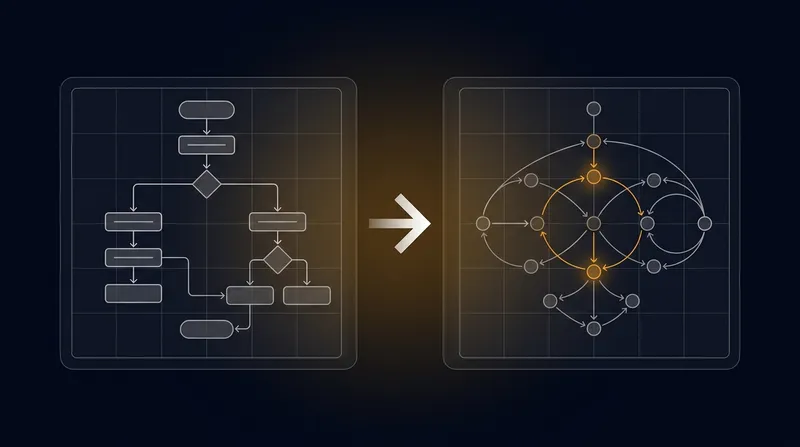
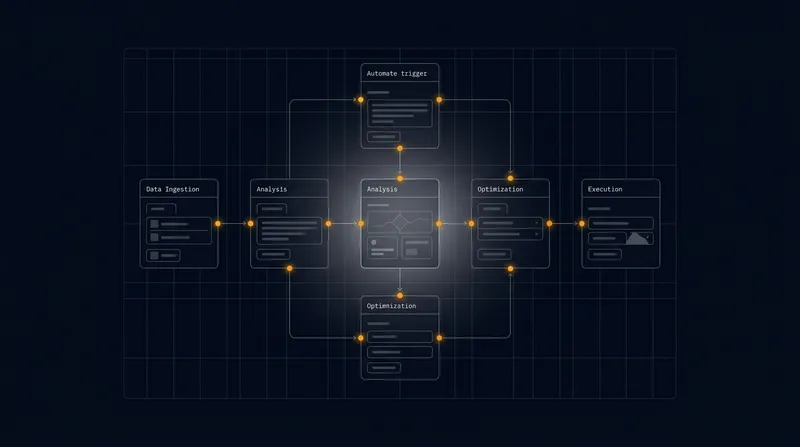
Closed-loop feedback solves this by creating a continuous cycle: observe performance, compare against targets, adjust intelligently, measure impact, repeat. Instead of deploying a workflow and hoping it holds, you build systems that self-correct in real time and alert operators when human judgment is needed.
For founder-led teams, this matters because it extends the value of your initial automation investment. A closed-loop system that improves itself costs less to maintain and scales faster than one requiring constant manual tuning. Responsiveness increases because performance regressions are detected and addressed within hours, not weeks. Resource consumption optimizes because telemetry reveals bottlenecks and inefficiencies. Quality and compliance improve because metrics tied to policy are continuously monitored and enforced.
The key is that closed-loop feedback does not replace human judgment. It amplifies it. You remain in control. Automation proposes adjustments, you approve or override, and the system learns from the outcome. This hybrid approach keeps risk low while accelerating improvement.
Core Architecture: Observation, Decision, Execution
A closed-loop system has three functional layers that work together: one that observes, one that decides, and one that executes. Separating these concerns lets you build, test, and improve each independently without destabilizing the whole system. Learn more in our post on Deploy Dynamic Workflow Optimization to Drive Continuous Operational Gains.
Observation layer collects telemetry from your workflows. This includes structured logs from each step, metrics like latency and error rates, and business events that represent outcomes. The observation layer standardizes and enriches this data so downstream systems can reason about it reliably.
Decision layer evaluates telemetry against your KPIs and determines what action to take. Early on, this is rule-based: if error rate exceeds threshold, alert the team. As you mature, it becomes policy-driven: adjust routing rules based on queue depth. Eventually, it can include learned models: predict which leads will convert and prioritize outreach accordingly.
Execution layer applies changes. This might mean updating feature flags, adjusting resource allocation, triggering an approval workflow, or sending an alert to your ops team. Every action is logged with full context so you can trace what happened, why it happened, and what the impact was.
Supporting these three layers are:
- Data pipeline and storage: Aggregates telemetry into queryable stores. Supports both real-time evaluation (for fast feedback loops) and historical analysis (for training and root cause investigation).
- Experiment platform: Runs controlled tests to validate that a proposed change actually improves your KPIs. This is how you avoid making things worse while trying to make them better.
- Human-in-the-loop interfaces: Dashboards, alerts, and approval workflows that keep your team informed and in control. Not every decision should be automated.
- Audit and observability: Complete traceability from telemetry to action to outcome. Essential for debugging, compliance, and learning.
The architecture must be resilient. If your observation layer fails, you lose visibility and cannot make informed decisions. If your decision layer is slow, feedback loops widen and you miss opportunities to correct course. If your execution layer is unreliable, approved changes do not apply consistently. Design with redundancy, monitoring, and graceful degradation in mind.
Instrumentation: Collecting Signals That Matter
Good instrumentation is foundational. Without the right signals, your closed-loop system has nothing to learn from. Start by mapping your high-level KPIs down to the low-level events and metrics that drive them. Learn more in our post on Measuring AI ROI: Metrics that Matter for CDOs Leading Automation Initiatives.
For example, if your KPI is "support ticket resolution time," instrument every step: time from ticket creation to assignment, time in queue, time spent by the agent, time to customer review, time to closure. This granularity reveals where delays happen so you can target improvements precisely.
Practical instrumentation practices:
- Define KPI-to-signal mappings. Every KPI should decompose into observable metrics and events. Document these mappings so the whole team understands what you are measuring and why.
- Use structured logging with consistent fields. Include correlation IDs, user IDs, workflow version, timestamps, and any other context that helps you trace behavior end-to-end.
- Capture outcome events, not just system states. Log when a lead qualified or disqualified, when a support issue was resolved, when a workflow completed successfully or failed. These outcomes are what drive learning.
- Tag telemetry with version metadata. When you deploy a new automation rule or update your AI model, tag all telemetry with that version. This lets you correlate behavioral changes to code changes.
- Implement sampling for high-volume processes. You do not need to log every single event. Stratified sampling gives you statistical accuracy without overwhelming your storage or analysis systems.
Telemetry must be accessible both in near real-time (for fast feedback loops that adjust within minutes) and historically (for training models and investigating root causes). This typically means a combination of streaming platforms for immediate signals and long-term stores for analysis.

Learning Loops: From Rules to Adaptive Behavior
A learning loop is the mechanism by which your system improves over time. It observes performance, identifies opportunities for improvement, makes a change, measures the impact, and feeds the results back into the next iteration. The loop must be safe, measurable, and incremental.
Start simple. Do not jump straight to machine learning. Here is a progression that works for most teams:
- Rule-based monitoring. Define thresholds. When error rate exceeds 5 percent, send an alert. When queue depth exceeds 20 items, notify the team. This is your foundation.
- Automated mitigations with approval. When a threshold is breached, automatically prepare a remediation (like rolling back a recent change) but require human approval before applying it. This is faster than purely manual response while keeping humans in control.
- Policy-driven adjustments. Use feature flags and heuristics to make low-risk adjustments automatically. For example, if latency is high, reduce batch size. If error rate spikes, increase timeout thresholds. Monitor the impact closely.
- Bandit algorithms for parameter tuning. Use multi-armed bandit approaches to test different parameter values (like routing weights or retry counts) and gradually shift traffic to the best performers. This is safer than A/B testing for continuous tuning.
- Learned models with safety constraints. Once you have solid instrumentation and governance, train models that predict the best action given current system state. Always include safety layers that prevent unsafe actions and circuit breakers that stop the loop if things go wrong.
Key principles for safe learning loops:
- Favor small, frequent adjustments over large infrequent changes. A 2 percent improvement applied every day is easier to measure and attribute than a 50 percent improvement applied once a quarter.
- Constrain the action space. Define what actions the system is allowed to take. If you have not explicitly approved an action, it should not happen automatically.
- Implement circuit breakers and rate limits. Prevent runaway behavior. If the system is oscillating or making decisions too rapidly, pause and alert.
- Make every action observable and reversible. Log the decision, the reasoning, and the outcome. Be able to roll back changes if needed.
- Expose confidence scores. When the system recommends an action, include a confidence estimate. Low confidence decisions should require human approval.
Log the full decision path for every automated action. This creates a rich dataset for improving your system over time. Use that data to retrain models, refine features, and identify patterns you missed. Incorporate domain knowledge through feature engineering and reward shaping so your system aligns with your business priorities.
KPIs, Experiments, and Measurement
You cannot improve what you do not measure. But measuring the wrong things wastes effort and creates false confidence. Choose KPIs carefully.
Good KPIs are actionable, decomposable, and tied to real business outcomes. Select a small set of primary metrics that reflect what matters most to your business. For support automation, this might be "average resolution time" and "customer satisfaction." For sales automation, it might be "leads qualified per day" and "conversion rate." Then add guardrail metrics that protect system health: error rates, cost per transaction, data quality scores.
Avoid metric sprawl. Too many metrics dilute focus and create conflicting incentives. Start with three to five primary metrics and expand only when you have strong evidence that a new metric reveals something important.
Use experiments to validate changes before rolling them out widely. A rigorous experiment framework prevents false positives and builds confidence in your improvements.
Experiment checklist:
- Define the hypothesis clearly. "If we increase timeout from 30 seconds to 60 seconds, resolution time will improve by 5 percent."
- Identify the primary metric and guardrail metrics. Primary metric measures whether the hypothesis is true. Guardrails catch unintended consequences.
- Calculate sample size. How much traffic do you need to see a statistically significant result?
- Set significance thresholds. What confidence level do you need before rolling out? 95 percent is standard.
- Define rollout criteria. If the experiment succeeds, what percentage of traffic gets the change? How fast?
- Monitor continuously. Watch for violations of guardrail metrics. Be prepared to stop the experiment if something goes wrong.
Common KPI categories for workflow automation:
- Performance: latency, throughput, error rates, availability.
- Cost: cost per transaction, cost per qualified lead, infrastructure cost.
- Quality: accuracy, precision, recall, customer satisfaction.
- Business outcomes: leads qualified, conversion rate, revenue impact, time to resolution.
- Operational health: mean time to detect issues, mean time to recover, incident frequency, escalation rate.
Maintain a lessons log. After each experiment, document what you learned. What assumptions were validated? What surprised you? How will this inform future decisions? This log becomes institutional knowledge that accelerates your improvement program over time.
Governance, Safety, and Explainability
Continuous optimization without governance creates drift and unintended consequences. You need guardrails that balance velocity with safety.
Governance should define:
- Approval processes. Who decides what changes can be automated? What requires human approval? What requires escalation?
- Monitoring thresholds. What metrics trigger an alert? What thresholds require immediate action?
- Audit requirements. What decisions must be logged? For how long? Who has access?
- Safety constraints. What actions are off-limits? What guardrails prevent unsafe behavior?
- Rollback procedures. If something goes wrong, how quickly can you revert? What is the process?
Explainability is critical for trust and compliance. Every automated decision should include reasoning that operators can understand. If your system decides to route a support ticket to a specialist instead of a generalist, explain why. If it decides to deprioritize a lead, show the evidence. This transparency builds confidence and helps catch errors.
Where regulatory or compliance constraints apply, maintain full provenance. Store the inputs, the decision logic, the decision, and the outcome. This audit trail protects you if decisions are later questioned.
Design incident playbooks for when things go wrong. Define detection thresholds, communication plans, rollback steps, and postmortem procedures. The faster you can respond to problems, the less damage they cause.
Security and privacy must be built into telemetry and learning pipelines. Do not log sensitive data in plain text. Use anonymization, hashing, and tokenization. Enforce access controls. Encrypt data in transit and at rest. Implement retention policies that comply with your obligations. For workflow automation, privacy-preserving feature engineering and synthetic data generation enable learning without exposing personal information.
Operational Roadmap: Three-Month Plan to Adaptive Workflows
You do not need to build everything at once. A focused three-month roadmap lets you establish solid foundations, prove value, and expand with confidence.
Month 1: Instrumentation Sprint
Your first month focuses on visibility. Map your key workflows and identify the KPIs that matter. Deploy structured logging across your automation stack. Centralize observability so you can query logs, metrics, and traces from a single place. Run data quality audits to ensure telemetry is complete and accurate. By the end of month one, you should have a clear picture of how your workflows perform and where the bottlenecks are.
Month 2: Decision and Action Prototypes
In month two, build your decision engine and action layer. Start with rule-based decisions: if error rate exceeds threshold, trigger an alert or a guarded mitigation. Implement feature flags so you can test changes safely. Run your first set of controlled experiments on low-risk parameters. For example, test whether increasing timeout reduces errors without hurting latency. Document what you learn. By the end of month two, you should have a working closed-loop system for at least one workflow.
Month 3: Scale and Governance
In month three, expand closed-loop coverage to additional workflows. Formalize governance: define approval processes, audit requirements, and safety constraints. Document runbooks and SLAs. Train your team on the new processes. By the end of month three, closed-loop feedback should be an operational capability, not an experiment.
Weekly rhythms matter. Schedule metric reviews every week to catch trends early. Plan experiments in advance. Run postmortems on incidents to capture learning. Use lightweight playbooks that define who owns each metric, who approves experiments, and how escalations happen. This structure reduces friction and keeps momentum.
Quarterly, step back and assess. Review model drift and data quality. Identify technical debt. Plan refactoring work. This preventive maintenance prevents the accumulation of hidden costs that erode your return on optimization investments.

Tooling Patterns and Selection Criteria
You do not need specialized tools to get started. Many teams build closed-loop systems with existing infrastructure: logging platforms, metric stores, and orchestration tools. As you mature, purpose-built platforms for feature engineering, model evaluation, and experiment management accelerate development.
When evaluating tools, prioritize:
- Integration with your existing stack. Can it ingest telemetry from your logging platform? Can it write decisions to your orchestration system?
- Real-time and batch evaluation. You need to evaluate decision logic both in real-time (for immediate feedback) and in batch (for training and analysis).
- Experimentation capabilities. Can it split traffic between control and treatment? Can it measure statistical significance? Can it roll back changes?
- Auditability and provenance. Can it trace every decision back to the inputs and logic that produced it?
- Security and compliance. Does it support access controls, encryption, and data retention policies?
- Transparency on cost and scalability. How does pricing scale with traffic? What are the limits?
A hybrid approach often works best. Use managed services for heavy lifting (data warehousing, model training) and lightweight in-house components for business logic and governance. This balances speed to market with control over sensitive decisions and data.
Operational Playbooks and Checklists
Operationalizing continuous optimization requires repeatable playbooks. Create checklists for each stage of the feedback loop so your team can move quickly and consistently.
Telemetry Validation Checklist
- Schema adherence: Do all logs follow the defined schema?
- Completeness: Are required fields present? What percentage of records have all fields?
- Latency: How long between event and ingestion? Is it acceptable for your use case?
- Sampling: If you are sampling, is the sampling strategy representative?
Experiment Readiness Checklist
- Hypothesis: Is it clearly stated? Is it testable?
- Sample size: Is it calculated correctly? Do you have enough traffic?
- Guardrails: What metrics protect against unintended consequences?
- Monitoring: What will you watch during the experiment?
- Rollback: How quickly can you stop the experiment if needed?
Automated Action Checklist
- Preconditions: What conditions must be true before the action executes?
- Safety constraints: What prevents unsafe actions?
- Audit trail: Is every action logged with full context?
- Notification: Does the right person get alerted?
Incident Response Checklist
- Detection: What metrics trigger an incident?
- Communication: Who gets notified? How?
- Rollback: What is the first action to take?
- Investigation: Who leads the postmortem?
Embed these checklists in your runbooks and automation so they are easy to execute under pressure. Use templates for experiment definitions and postmortem reports. This ensures knowledge is captured and reused across your organization.
Common Pitfalls and How to Avoid Them
Teams building closed-loop systems encounter predictable obstacles. Learning from others' mistakes accelerates your progress.
Poor Data Quality
Garbage in, garbage out. If your telemetry is incomplete, inconsistent, or inaccurate, your learning loops will make poor decisions. Prevention: enforce schemas, run continuous data quality checks, and instrument end-to-end tests that validate telemetry completeness.
Unclear or Misaligned KPIs
If your KPIs do not reflect what actually matters to your business, you will optimize for the wrong things. Prevention: map KPIs to stakeholders and business outcomes. Maintain a small set of prioritized metrics. Align incentives across teams.
Overfitting and Model Drift
Models trained on historical data may not generalize to new situations. Seasonal patterns, market shifts, and customer behavior changes can make your models obsolete. Prevention: use proper validation on held-out data, implement shadow testing where new models run alongside production without affecting outcomes, and monitor for drift. Retrain regularly on representative historical windows.
Governance Gaps
Without clear approval processes, audit trails, and safety constraints, automated systems can cause harm before anyone notices. Prevention: establish governance before enabling automated actions at scale. Start with low-risk changes that require approval. Expand slowly to higher-risk decisions.
Lack of Cross-Functional Alignment
Continuous optimization requires collaboration between operators, data engineers, and product owners. Siloed teams create friction and poor decisions. Prevention: create cross-functional teams. Give them shared ownership of KPIs. Involve them in experiment planning and postmortems.
Getting Started: A Focused Pilot Program
Do not try to optimize everything at once. Start with a single high-impact, low-risk workflow. Use this checklist to launch your pilot:
- Choose your workflow. Pick something that matters to your business but where mistakes are low-risk. Support ticket routing or lead qualification are good starting points.
- Define success metrics. What does success look like? Faster resolution? Higher quality? Lower cost? Be specific and measurable.
- Instrument end-to-end. Deploy structured logging at every step. Validate data quality. Ensure you can trace outcomes back to decisions.
- Build a minimal decision engine. Start with rules. If latency exceeds threshold, alert. If queue depth exceeds limit, escalate. Keep it simple.
- Run controlled experiments. Test small changes. Measure impact. Learn what works in your context.
- Establish governance. Define who approves changes. What gets logged. How you roll back. Keep it lightweight but clear.
- Document and expand. Capture lessons from the pilot. Plan how to expand to additional workflows. Build on what you learned.
This incremental approach lets you demonstrate value quickly. Early wins build momentum and buy-in for expanding the program to more workflows.
Conclusion: From Static Automation to Adaptive Advantage
Continuous optimization through closed-loop feedback transforms automation from a one-time deployment into a compounding competitive advantage. Static automation works for a while, then degrades as conditions change. Adaptive automation learns from every operational cycle and improves continuously.
For founder-led B2B teams, this capability is particularly valuable. You do not have the resources to manually tune every workflow constantly. But you do have the agility to implement smart feedback loops that improve themselves. A closed-loop system that costs 10 hours per month to maintain scales better than one requiring 40 hours of manual optimization.
The path forward is straightforward. Start with clean instrumentation that gives you visibility into what is actually happening in your workflows. Build a modular architecture that separates observation, decision, and execution. Implement learning loops that are incremental, safe, and measurable. Design KPIs that reflect real business outcomes and pair them with guardrails that protect system health. Establish governance that balances velocity with safety. Use experimentation to validate improvements before rolling them out widely.
Begin with a focused pilot on a single workflow. Instrument thoroughly. Run controlled experiments. Capture learning. Expand to additional workflows as you build confidence. Over time, closed-loop feedback becomes part of your operational fabric. Your systems improve without constant manual intervention. Your team focuses on high-value work instead of fighting fires. Your automation scales with your business.
The teams that win in 2026 will be those that turn their automation into learning systems. Start today. Pick one workflow. Instrument it. Implement a simple closed-loop feedback mechanism. Run experiments. Measure impact. Expand. The compounding returns from continuous optimization will compound quarter after quarter, giving you an operational advantage that is hard for competitors to match.
Next step
Book the Opportunity Sprint