A.I. PRIME - Article
Governed AI Guardrails: Implementing Compliant Oversight for Agentic Systems
Embed governance directly into agentic AI architecture to balance autonomy with compliance, audit trails, and real-time policy enforcement.

Autonomous agents are transforming how founder-led B2B teams automate work. They handle customer inquiries, qualify leads, process transactions, and execute workflows without human intervention. But this autonomy creates a critical tension: how do you let agents move fast and independently while maintaining the control, transparency, and compliance your business demands?
Many organizations deploying agentic AI face this exact problem. They want agents to make decisions in real time, execute workflows without bottlenecks, and drive measurable ROI. Yet they also need visibility into every decision, proof that decisions align with policy, and the ability to intervene when necessary. The answer is not choosing between speed and safety - it is embedding governance directly into your agentic architecture from the start.
This approach ensures compliance, auditability, and explainability become operational advantages rather than friction points. In this guide, we explore how to design and deploy governed AI guardrails that let your autonomous agents thrive within a framework of intelligent oversight, reducing risk while accelerating outcomes.
The Core Problem: Autonomy Without Accountability
Autonomous agents represent a fundamental shift in how teams automate work. Unlike traditional rule-based workflows that follow predefined sequences, agentic systems learn from context, adapt to new scenarios, and make decisions that humans may not have explicitly programmed. This flexibility is their superpower - it enables rapid response to market changes, personalized customer interactions, and operational efficiencies that manual processes cannot match. Learn more in our post on Build Governed AI Agents That Scale: Embedding Compliance Into Autonomous Systems.
But this autonomy creates a governance paradox. The more freedom an agent has to act independently, the harder it becomes to ensure compliance, maintain audit trails, and demonstrate that decisions align with regulatory or business requirements. A sales agent autonomously reaching out to prospects needs guardrails that prevent discriminatory targeting. A financial processing agent handling transactions must leave an immutable record of every decision. A support agent cannot violate customer privacy, even in pursuit of efficiency.
Traditional governance approaches treat compliance as a post-hoc verification layer. Agents execute actions, and then human auditors review logs to confirm adherence to policy. This reactive model creates delays, increases costs, and introduces blind spots where non-compliant behavior goes undetected until it causes damage.
Modern governance integration flips this model: compliance becomes a real-time, embedded constraint that shapes every decision an agent makes before it acts. This requires embedding governance at multiple architectural layers - from the data inputs the agent accesses, to the decision logic it applies, to the outputs it generates and the audit records it maintains. When designed correctly, this integration actually accelerates agent performance by reducing friction, eliminating post-action corrections, and building trust with stakeholders who might otherwise resist agentic automation.
Five Pillars of Governed Agentic Systems
Effective governed AI guardrails rest on five interconnected pillars. Each addresses a distinct dimension of compliance and control, yet together they form a unified framework that allows agents to operate autonomously within defined boundaries. Learn more in our post on Assess Your Legacy Systems for Agentic AI: A Practical Framework for B2B Teams.
Pillar One: Immutable Audit Trails and Decision Records
Auditability is the foundation of any compliant autonomous system. You must be able to reconstruct exactly what an agent did, why it did it, and what information informed each decision. This requires more than simple logging - a comprehensive audit trail captures the reasoning chain that led to each decision.
In practice, this means recording the agent's input data, the policies and constraints it considered, the alternatives it evaluated, and the decision weights it applied. For a lead qualification agent, the audit trail shows which prospect characteristics were evaluated, how they were weighted against qualification policy, what thresholds triggered acceptance or rejection, and which business rules were applied at each step. If a question arises later about whether the agent applied fair qualification practices, your organization can produce a complete, timestamped record that demonstrates compliance.
Immutable decision trails go further. Using cryptographic hashing or append-only storage, you create a tamper-proof record that cannot be altered retroactively. This is particularly critical in regulated industries, where the integrity of decision records directly impacts legal liability. An immutable trail proves not only what the agent decided, but that the record has never been modified.
Implementation requires careful architecture. Your agent framework must capture decision data at the moment of action, store it in a secure, append-only system, and make it easily accessible to audit tools. This should happen transparently - agents do not need to pause or slow down to create audit records. The logging infrastructure runs in parallel, capturing data without impacting agent velocity.
Pillar Two: Access Controls and Data Boundaries
Autonomous agents are only as trustworthy as the data they can access. An agent with unrestricted access to customer records, financial systems, or proprietary information poses massive compliance and security risks. Governed AI guardrails include fine-grained access controls that define exactly which data sources an agent can query, under what conditions, and with what restrictions.
This moves beyond traditional role-based access control, which assumes human operators. Agents operate continuously, autonomously, and at scale - they may make thousands of decisions per hour. Your access control framework must be equally dynamic and precise. A support agent might have read-only access to customer contact information and order history, but zero access to payment methods or sensitive credentials. A sales agent might access prospect databases and engagement history, but not competitor intelligence or strategic account plans.
Data boundaries also include temporal constraints. An agent might have access to real-time transaction data for the current day, but only historical summaries for older periods. It might have access to live customer data during business hours, but only anonymized data for model training after hours. These boundaries are enforced at the data layer, not the agent layer - the agent cannot even request data it is not authorized to see.
Implementation requires integration with your data governance infrastructure. A modern data platform should support attribute-based access control, where access decisions are based on attributes of the agent, the data, the context, and the policy. Your agents connect through a governance-aware data layer that enforces these controls transparently. When an agent requests data, the system evaluates whether the request complies with policy, grants or denies access, and logs the attempt.
Pillar Three: Policy Enforcement and Constraint-Based Reasoning
Policies define the rules that autonomous agents must follow. These range from high-level business rules (never approve opportunities below a certain quality score) to compliance constraints (do not process transactions from restricted regions) to operational guidelines (escalate decisions involving amounts over a threshold to human review). Governed AI guardrails embed these policies directly into the agent's decision-making engine.
Constraint-based reasoning treats policies as hard constraints that shape what actions an agent can take. Rather than allowing the agent to decide freely and then checking whether its decision violates policy, the framework limits the agent's decision space to actions that are policy-compliant from the start. This is more efficient and more reliable than post-hoc policy checking.
Consider a sales agent that autonomously reaches out to prospects. Without embedded policy enforcement, the agent might make outreach decisions based purely on predicted conversion probability, potentially targeting wrong segments or violating campaign rules. With constraint-based governance, the agent's decision engine includes fairness constraints that prevent it from considering protected attributes, geographic constraints that prevent outreach to certain regions, and opt-out constraints that prevent contacting prospects who have requested exclusion.
Implementing policy enforcement requires a policy language that is expressive enough to capture complex business rules, yet interpretable enough that auditors can verify compliance. Many organizations use declarative policy frameworks where policies are written as rules or logical statements, separate from the agent's core logic. This separation makes policies easier to update, audit, and version control. When business rules change, you update the policy framework without touching the agent code itself.
Pillar Four: Explainability and Decision Transparency
Even with perfect auditability and policy enforcement, autonomous agents face a credibility problem: stakeholders do not trust decisions they cannot understand. Explainability addresses this by providing clear, human-comprehensible explanations for why an agent made a particular decision. This is essential for building trust with business stakeholders, regulators, and the customers affected by agent decisions.
At the simplest level, an agent should articulate which factors influenced a decision. A lead qualification agent might explain: "This prospect was qualified because their company size is 50+ employees (meets our 25+ threshold), they are in our target industry (SaaS), and they showed engagement with our content (opened 3 emails). All three factors met qualification criteria." This explanation is specific, policy-grounded, and verifiable.
More sophisticated explainability techniques provide counterfactual explanations: what would have to change for the decision to be different? For the prospect above, the explanation might continue: "If the company size were below 25 employees, the prospect would not qualify. The other factors are sufficient for qualification." This helps prospects understand what they would need to do to change the outcome, and helps your team verify that the decision boundary is appropriate.
Explainability also serves quality assurance. By examining explanations across many decisions, you can identify patterns - perhaps the agent is systematically overweighting certain factors, or systematically making decisions that violate implicit business intent. These patterns surface problems early, before they scale into widespread issues.
Implementing explainability requires designing agents with interpretability in mind from the start. Some agent architectures are inherently more explainable than others. Rule-based agents, where decisions flow from explicit if-then policies, are highly explainable. Deep learning models, while powerful, are often opaque. Many organizations use hybrid approaches: a neural component for pattern recognition and feature extraction, combined with a rule-based or decision tree component for final decision-making. This preserves the power of machine learning while maintaining explainability.
Pillar Five: Real-Time Guardrails and Automated Enforcement
The final pillar is automation. Governance integration is not just about creating policies and recording decisions - it is about enforcing policies in real time, automatically, as agents operate. This requires guardrail systems that monitor agent behavior continuously and intervene when necessary.
Real-time guardrails operate at multiple levels. At the decision level, guardrails prevent an agent from taking actions that violate policy. At the behavioral level, guardrails detect patterns of decisions that collectively violate policy, even if each individual decision is compliant. At the outcome level, guardrails monitor the real-world results of agent decisions and flag unexpected patterns that might indicate a problem.
For example, a hiring agent might be policy-compliant in each individual hiring decision - it never explicitly considers protected characteristics, it applies consistent evaluation criteria, it documents its reasoning. Yet if you analyze the aggregate outcomes, you discover that the agent is systematically hiring fewer women than men, despite receiving equally qualified female applicants. This pattern violation would be caught by behavioral guardrails that analyze aggregate outcomes, not just individual decisions.
Automated enforcement means guardrails trigger interventions without human involvement. A decision that violates hard constraints is simply prevented - the agent cannot execute it. A decision that violates soft constraints might be flagged for human review, with the agent pausing until a human approves or rejects the action. A behavioral pattern that suggests systemic bias might trigger automatic model retraining or policy adjustment.
Implementing real-time guardrails requires infrastructure that can evaluate policies continuously, at scale, with minimal latency. Your agent framework should emit decision events in real time, feeding them into a monitoring system that evaluates them against guardrail policies. When a violation is detected, the system can trigger automated responses - blocking the action, escalating for review, logging an alert, or updating the agent's constraints.

Architecting Governance Into Your Agent Systems
Understanding the five pillars of governance integration is one thing; implementing them in your actual agentic systems is another. Architecture matters enormously. A system designed without governance in mind will be difficult and expensive to retrofit with compliance controls. A system designed with governance as a core architectural principle will be more efficient, more trustworthy, and easier to operate at scale. Learn more in our post on Security and Compliance for Agentic AI Automations: A Practical Governance Guide.
The Governance-First Architecture Pattern
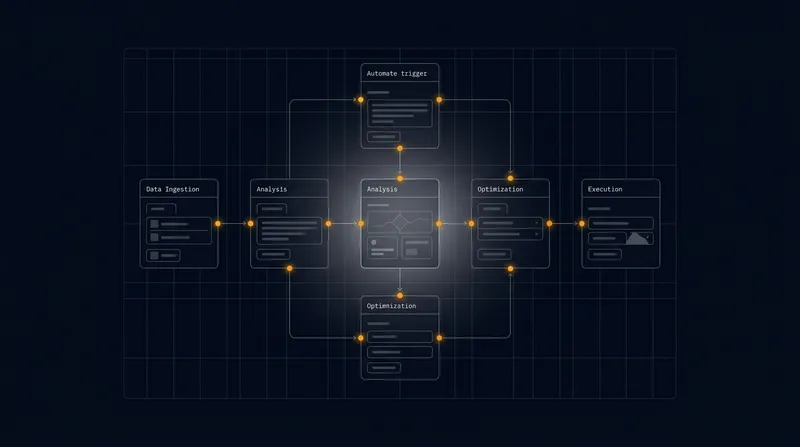
A governance-first architecture treats compliance as a first-class concern, not an afterthought. This means building governance controls into every layer of your agentic system - from data ingestion, through decision-making, to action execution and audit logging.
At the data layer, implement a governance-aware data access service. Rather than agents querying data sources directly, they request data through a service that enforces access controls, applies data transformations required by policy, logs all data access, and returns data with metadata about its provenance and policy constraints. This service is the single point of enforcement for data governance.
At the decision layer, implement a policy engine that evaluates agent decisions against compliance constraints before they are executed. This engine takes as input the proposed decision, the relevant policies, and the decision context, and returns a verdict: approve, deny, or escalate. The policy engine should support multiple policy languages - some organizations use declarative rule languages, others use decision trees, others use constraint satisfaction approaches. The key is that policies are defined separately from agent code, versioned independently, and auditable.
At the execution layer, implement controls that prevent agents from executing decisions that have not been approved by the policy engine. This is a hard technical boundary - the agent simply does not have the capability to take actions that bypass governance. If a decision requires human approval, the agent pauses and waits for a human decision, which is then logged as part of the audit trail.
At the logging layer, implement an immutable audit system that captures every decision, its justification, the policies applied, the data accessed, and the outcome. This audit system should be separate from operational systems - it is write-only, append-only, and designed for long-term retention and analysis. Audit data feeds into compliance reporting tools and forensic analysis systems.
Integration With Existing Systems
Most organizations have existing governance infrastructure - data catalogs, access management systems, policy repositories, compliance reporting tools. Governance integration means connecting your agentic systems to these existing tools, not building parallel governance systems.
This integration happens at multiple points. Your agents should query your data catalog to understand data lineage, ownership, and quality before using data in decisions. Your policy engine should pull policies from your central policy repository, ensuring agents follow the same policies as human employees. Your audit system should feed into your central audit log and compliance reporting infrastructure. Your access control system should integrate with your identity and access management platform.
This integration approach has multiple benefits. It ensures consistency - agents follow the same policies as human employees. It reduces duplication - you maintain one policy repository, not separate ones for agents and humans. It simplifies compliance - auditors can examine a unified governance infrastructure rather than trying to understand separate systems. And it makes governance updates efficient - when policies change, the change automatically applies to all agents that consume those policies.
Balancing Governance With Performance
A common concern with governance integration is performance overhead. If every agent decision must be evaluated against policies, logged to an audit system, and checked against access controls, will this slow down agent execution to unacceptable levels?
In practice, well-designed governance infrastructure adds minimal overhead. Access control checks are fast - they are simple attribute comparisons. Policy evaluation is fast - most policies are simple rules that evaluate in milliseconds. Logging is fast - it is asynchronous and does not block agent execution. The key is designing the infrastructure to minimize latency without compromising governance.
This requires careful architectural choices. Use caching to avoid repeated policy evaluations for similar decisions. Use asynchronous logging so audit writing does not block agent execution. Use distributed policy engines so evaluation scales horizontally. Use edge computing so governance enforcement happens close to where decisions are made, minimizing network latency.
In many cases, governance integration actually improves performance. By preventing invalid decisions at the point of decision-making, rather than catching them after the fact, you reduce the cost of error correction. By providing agents with clear policy constraints, you reduce the search space the agent must explore, making decision-making faster. By integrating with your data governance infrastructure, you ensure agents access optimized data pipelines rather than querying raw data sources.
Practical Steps: From Design to Deployment
Implementing governed AI guardrails is not a single project - it is a continuous practice that evolves as your agentic systems mature. However, there are concrete steps you can take to move from design to deployment.
Step One: Map Your Compliance Requirements
Before you implement any governance controls, understand what you need to comply with. This includes regulatory requirements specific to your industry, internal policies that govern decision-making, and stakeholder expectations about how your systems should behave.
Create a compliance map that documents these requirements and traces them to your agentic systems. Which agents handle sensitive data? Which agents make decisions that could harm customers or violate regulations? Which agents operate in jurisdictions with specific compliance requirements? For each agent, identify the specific compliance obligations it must meet.
This map becomes your governance roadmap. It prioritizes which agents need which governance controls, and in what order to implement them. Agents handling sensitive data or making high-impact decisions get comprehensive governance first. Agents with lower risk can have simpler governance that can be enhanced over time.
Step Two: Design Policy Frameworks
For each agent, design a policy framework that captures the compliance requirements it must meet. This framework should be expressed in a form that is both machine-readable (so your policy engine can evaluate it) and human-readable (so auditors and business stakeholders can verify it).
A good policy framework includes constraints (hard rules that must never be violated), thresholds (decision boundaries that trigger human review or escalation), and fairness requirements (rules that ensure decisions are not discriminatory). For a lead qualification agent, constraints might include "never qualify prospects below a minimum company size" and "never use industry stereotypes in qualification decisions." Thresholds might include "escalate decisions involving strategic accounts to human review." Fairness requirements might include "ensure qualification rates are consistent across prospect segments."
Document these policies clearly, with business justification for each. This documentation becomes part of your compliance evidence - it shows auditors and stakeholders that your governance is intentional and well-thought-out, not accidental.
Step Three: Implement Governance Infrastructure
With your policies defined, implement the infrastructure to enforce them. This includes a policy engine that evaluates decisions against policies, an audit system that logs all decisions and their justifications, an access control system that restricts agent data access, and monitoring systems that detect policy violations.
Start with the highest-risk agents first. Implement comprehensive governance for agents handling sensitive data or making high-impact decisions. As you build experience, expand governance to other agents. This phased approach reduces implementation risk and lets you learn from early deployments.
Use existing tools where possible. Many organizations already have policy engines, audit systems, and access control infrastructure. Integrate your agentic systems with these existing tools rather than building new ones. This reduces implementation cost and complexity.
Step Four: Test and Validate
Before deploying governed agents to production, test them thoroughly. This includes testing that governance controls work as intended, testing that policies are correctly implemented, and testing that governance does not introduce unintended side effects.
Create test scenarios that exercise your governance controls. For a lead qualification agent, create test prospects that should be qualified, rejected, and escalated. Verify that the agent makes the correct decisions and logs them correctly. Create test scenarios that attempt to violate policies - verify that the agent cannot execute policy-violating decisions.
Involve team members who understand compliance and business rules in testing. They understand requirements and can verify that governance implementation actually achieves your objectives. This early involvement builds confidence in the governed system and identifies problems before production deployment.
Step Five: Monitor and Improve Continuously
After deployment, continuously monitor your governed agents. Track metrics like policy violation rates, decision distribution across policy thresholds, escalation rates, and audit log completeness. These metrics tell you whether governance is working as intended.
Use audit logs to analyze agent behavior. Are agents making decisions that are compliant but unintended? Are certain policies being violated repeatedly, suggesting they need adjustment? Are there patterns in decisions that suggest unintended bias? This analysis feeds into continuous improvement of your governance framework.
Update policies as business needs and requirements change. Governance is not static - it evolves as your organization learns and as external requirements change. Treat policy updates as normal operational changes, with version control, testing, and change management.
Overcoming Common Implementation Challenges
Organizations implementing governed AI guardrails typically encounter several challenges. Understanding these challenges and how to address them accelerates your implementation.
Challenge One: Policy Definition Complexity
Policies are often harder to define than they initially appear. What seems like a simple rule - "never qualify unfit prospects" - becomes complex when you try to operationalize it. How do you define fitness? What data do you use? How do you handle edge cases? How do you handle conflicts between multiple policies?
Address this by starting simple. Define policies at a high level first, then decompose them into specific, testable rules. Involve business stakeholders in policy definition - they understand the business intent behind policies. Involve compliance teams if applicable - they understand regulatory requirements. Involve data teams - they understand what data is available and reliable. This collaborative approach produces policies that are both compliant and operationally feasible.
Use policy versioning and testing to manage policy complexity. Treat policies like code - version them, test them, review them before deployment. This discipline prevents policy bugs that could lead to compliance violations or unintended behavior.
Challenge Two: Legacy System Integration
Most organizations have systems that were not designed with governance integration in mind. Integrating governance with these systems is often complex. A legacy data system might not support fine-grained access controls. A legacy business system might not expose decision audit trails. A legacy policy system might not integrate with modern policy engines.
Address this by building an integration layer that sits between your agentic systems and legacy systems. This layer enforces governance even when the underlying systems do not natively support it. For example, if a legacy data system does not support fine-grained access control, your integration layer can apply access controls at query time, masking or filtering data before returning it to agents.
Prioritize modernizing the most critical systems first. If your most sensitive data lives in a legacy system that cannot be governed, that becomes a priority for modernization. Over time, as you modernize systems, governance integration becomes easier and less costly.
Challenge Three: Performance and Scalability
Governance infrastructure adds overhead. At small scale, this overhead is negligible. At large scale - when agents are making thousands of decisions per hour - governance overhead can become significant. Policy evaluation, access control checks, and audit logging all consume compute resources.
Address this through architectural optimization. Use caching to avoid repeated evaluations. Use asynchronous processing for audit logging. Use distributed systems to scale governance infrastructure horizontally. Use edge computing to move governance enforcement closer to decision-making. These techniques allow governance to scale with agent volume without becoming a bottleneck.
Measure overhead carefully. Many organizations find that governance overhead is much smaller than expected - often less than 5% latency impact for well-designed systems. In some cases, governance actually improves performance by preventing invalid decisions that would otherwise require correction.
Challenge Four: Stakeholder Buy-In and Trust
Governance adds visible constraints to agentic systems. Business stakeholders may perceive governance as slowing down agents or preventing them from taking optimal actions. Teams may perceive governance as adding operational complexity.
Address this through clear communication about governance value. Governance is not just about compliance - it is about building trust and reducing risk. It is about enabling agents to operate at scale without creating liability. It is about providing the transparency and auditability that customers and partners demand. Frame governance as an enabler of agentic automation, not a constraint on it.
Demonstrate governance value through metrics. Show how governance prevents compliance violations that would be costly. Show how governance enables faster deployment of agents because stakeholders trust them. Show how governance reduces operational risk. These metrics build buy-in across the organization.
Getting Started With Governed Agents
Implementing governed AI guardrails is one of the most important decisions you will make in your agentic AI journey. It determines whether your autonomous agents become trusted, scalable assets that drive competitive advantage, or risky systems that create liability and constrain your ability to innovate.
The good news is that governance integration is achievable. By embedding auditability, access controls, explainability, and automated policy enforcement into your agentic architecture from the start, you create systems that are simultaneously more powerful and more trustworthy. These systems move faster because they do not need post-hoc verification. They scale further because stakeholders trust them. They create less risk because they operate within clear boundaries.
Start by assessing your current agentic systems against the five pillars of governance integration: immutable audit trails, access controls, policy enforcement, explainability, and automated guardrails. Where are you strong? Where are you vulnerable? What governance investments would reduce your risk and enable faster deployment?
At A.I. PRIME, we specialize in helping founder-led B2B teams implement governed agentic systems that deliver measurable operational results within a framework of intelligent oversight. Our 14-day engagement includes designing governance-first architectures, implementing policy frameworks aligned to your business rules, integrating governance with your existing systems, and establishing practices that keep governance effective as your agents evolve.
We work with your team to map your compliance requirements, design policies that are both rigorous and operationally feasible, implement infrastructure that enforces governance at scale, and establish monitoring practices so you maintain control as your agents handle more decisions. The result is agents that move fast, scale reliably, and maintain the trust and accountability your business demands.
If you are deploying autonomous agents and need to maintain control and compliance, governance integration is not optional - it is essential. The question is not whether to govern your agents, but how to govern them in ways that enhance rather than hinder their effectiveness. Reach out to discuss how governed AI guardrails can accelerate your autonomous agent strategy while maintaining the oversight your business requires.
Conclusion
The future of autonomous AI belongs to organizations that embed governance into their agentic systems from day one. As we have explored throughout this guide, governed AI guardrails are not constraints that slow innovation - they are accelerators that enable trust, scalability, and competitive advantage at enterprise scale.
The five pillars of governance integration - immutable audit trails, granular access controls, policy enforcement, explainability, and automated guardrails - work together to create agentic systems that are simultaneously more powerful and more accountable. Organizations that implement these pillars early gain measurable benefits: faster deployment cycles, reduced operational risk, stronger stakeholder confidence, and agents capable of handling increasingly complex decisions within clear boundaries.
The competitive advantage goes to teams that move decisively. Every quarter you delay governance integration is a quarter your agents operate without the trust mechanisms that unlock their full potential. Every decision made without proper auditability or policy enforcement is a liability waiting to materialize. Conversely, every governance investment you make today compounds - enabling you to deploy agents faster, scale them further, and maintain the oversight that stakeholders demand.
Your next step is clear: assess your current agentic architecture against the governance pillars outlined here. Identify the gaps. Prioritize the investments that will have the highest impact on your business. Then act. The organizations that will lead in autonomous AI are those that recognized early that governance and innovation are not opposing forces - they are partners in building AI systems that scale responsibly and deliver lasting value.
Governed AI guardrails are not the future of autonomous systems. They are the present. The question is whether your organization will lead or follow.
Next step
Book the Opportunity Sprint