A.I. PRIME - Article
The Rise of Real-Time Prescriptive Insights: Changing How Enterprises Operate
Compress decision latency and transform enterprise operations with real-time prescriptive insights that enable autonomous execution at scale.

Enterprise operations have historically moved at the speed of human decision-making. A problem emerges, data is gathered, analyzed, and presented to a decision-maker, who then authorizes action. This cycle - often spanning hours or days - has become a critical bottleneck in competitive markets. What if your organization could compress that entire loop into seconds? Real-time insight loops paired with autonomous execution are fundamentally reshaping how enterprises operate, turning reactive management into proactive optimization. The challenge is no longer whether you can access data - it's whether you can transform that data into actionable prescriptions fast enough to matter. Organizations that master real-time prescriptive insights are discovering a competitive advantage that extends far beyond operational efficiency: they're restructuring their organizations, redefining roles, and positioning themselves to outmaneuver slower competitors. This shift represents more than a technology upgrade; it's an operational transformation that touches every layer of enterprise decision-making.
Understanding Real-Time Prescriptive Insights and Their Core Impact
Real-time prescriptive insights represent a fundamental evolution in how enterprises access and act on business intelligence. Unlike traditional analytics that describe what happened or predictive models that forecast what might happen, prescriptive insights go one step further - they tell you exactly what action to take right now, and they deliver that recommendation within the operational window where it matters. Learn more in our post on Predictive Scoring Loops to Prioritize Cases and Reduce MTTR.
The distinction is critical. A descriptive insight might tell you that customer churn increased by 15% last quarter. A predictive insight might forecast which customers are likely to churn next month. A prescriptive insight, delivered in real time, identifies that a specific customer is showing churn signals right now and recommends the exact intervention - whether that's a personalized offer, a service upgrade, or an escalated support interaction - that should happen within the next few minutes to retain that customer.
When these prescriptive insights flow continuously into autonomous systems capable of executing recommendations without human intervention, the operational impact becomes transformative. Decision latency - the time between identifying a problem and taking corrective action - collapses from hours to seconds. This compression doesn't just speed up existing processes; it fundamentally changes what's possible within those processes.
Real-time systems in 2026 do not mean instant responses - they mean systems designed to respond fast enough to support operational decisions, automation, and scalable growth within defined and predictable timeframes.
Consider a manufacturing scenario. Traditional quality control might identify a production defect after 500 units have been manufactured, triggering a costly recall. A real-time prescriptive insight loop catches that same defect after five units by continuously analyzing sensor data, predicting the failure mode before it manifests, and prescribing immediate equipment adjustment. The autonomous execution system implements that adjustment automatically, preventing the defect entirely. The operational impact is measured not just in cost avoidance but in the elimination of decision latency that created the risk in the first place.
How Decision Latency Compression Reshapes Competitive Positioning
In markets where customer expectations and competitive dynamics shift by the hour, decision latency is a hidden tax on competitiveness. Organizations operating on traditional decision cycles - where insights are generated daily, reviewed in meetings, and implemented over days - are structurally disadvantaged against competitors who can perceive, analyze, and respond to the same signals in real time. Learn more in our post on Augmented Ops: How Agentic AI and Human Teams Should Share Decision Rights in 2025.
The financial services industry provides a clear example. A real-time prescriptive insight loop monitoring trading patterns might identify an emerging market opportunity - a specific asset class showing unusual volume patterns that historically precede significant price movements. In a traditional environment, an analyst discovers this pattern the next morning, prepares a report, presents it in a meeting, and the trading desk executes hours later. In a real-time prescriptive environment, the system identifies the pattern, prescribes the optimal trade size and timing, and executes within milliseconds. The faster organization captures the opportunity; the slower one observes it from the sidelines.
This latency compression effect multiplies across an organization. In customer service, real-time insights enable support agents to see not just the customer's current issue but the optimal resolution before the customer finishes describing the problem. In sales, prescriptive insights identify the exact moment in a prospect's buying journey when they're most receptive to a specific message and deliver that message through the preferred channel automatically. In operations, equipment maintenance shifts from reactive repair to predictive intervention because insights about degradation arrive before failure occurs.
The competitive advantage compounds because latency compression enables a fundamentally different operational model. Competitors still operating on traditional decision cycles find themselves perpetually behind, reacting to conditions that faster organizations have already addressed. This creates a widening performance gap that becomes difficult to close without fundamental operational restructuring.
Organizations that implement real-time insight loops report measurable shifts in market position: faster response to customer needs, higher win rates in competitive situations, lower operational costs from prevented problems rather than managed crises, and improved employee satisfaction because teams spend less time in reactive firefighting and more time on strategic initiatives.
Organizational Design Transformation: From Hierarchies to Autonomous Networks
Perhaps the most underestimated impact of real-time prescriptive insights is how they force organizations to rethink their fundamental structure. Traditional organizational hierarchies evolved to manage decision-making in an environment where information moved slowly and decisions required human judgment and accountability at multiple levels. A frontline employee identifies a problem, escalates to a supervisor, who escalates to a manager, who consults with leadership, who authorizes action. This structure made sense when information took days to travel and decisions required deliberation. Learn more in our post on Data Orchestration Best Practices to Power Predictive Scoring Loops.
Real-time prescriptive insights collapse this structure. When an autonomous system has already analyzed all available data, consulted all relevant constraints and policies, and prescribed the optimal action, the traditional escalation ladder becomes unnecessary friction. The question shifts from "who has authority to decide?" to "does this decision fall within acceptable parameters for autonomous execution?" This distinction enables a radical flattening of organizational hierarchies.
Consider a customer service organization. Traditionally, complex customer issues escalate through multiple tiers: frontline agent, team lead, supervisor, manager, potentially to a director before a decision is made. With real-time prescriptive insights, the system analyzes the customer's history, identifies the root cause of their issue, calculates the financial impact of different resolution options, and prescribes the optimal action - which might be a full refund, a service credit, a product replacement, or a combination. The frontline agent, armed with this prescription and the knowledge that it's already been validated against company policy and profitability constraints, can implement it immediately.
Organizations implementing real-time insight loops discover that traditional hierarchies become operational bottlenecks rather than necessary structures for managing risk and ensuring quality.
This transformation extends beyond customer-facing roles. In product development, real-time insights about feature usage and customer feedback enable autonomous systems to prescribe product roadmap adjustments without waiting for quarterly planning cycles. In supply chain management, prescriptive insights about demand signals enable autonomous reordering and supplier coordination without manual intervention at multiple approval levels. In human resources, insights about employee engagement and flight risk enable autonomous interventions - personalized development opportunities, flexible work arrangements, or career path adjustments - that address issues before they escalate to turnover.
The new organizational model is less hierarchy and more network. Autonomous systems operate as intelligent nodes within this network, each responsible for specific decision domains, each equipped with real-time insights within that domain, each capable of taking action within defined parameters. Human expertise shifts from making routine decisions to designing the decision frameworks that guide autonomous systems, setting the boundaries of acceptable action, and intervening only when situations fall outside normal parameters.
This doesn't eliminate human judgment - it elevates it. Humans focus on the decisions that matter most: setting strategy, defining values and constraints, designing autonomous decision frameworks, and handling exceptions that fall outside normal operating patterns. The effect on organizational culture is profound. Employees experience less frustration with slow decision-making and more engagement with meaningful work. The organization becomes more responsive to opportunities and threats because decisions happen at the speed of data flow rather than the speed of meeting schedules.
Governance and Control in Autonomous Networks
The risk that emerges from this organizational transformation is obvious: without careful governance, autonomous systems operating at scale can make decisions that violate company values, exceed risk tolerance, or create compliance violations. The solution is not to eliminate autonomous execution but to build governance directly into the real-time insight loop.
Effective governance in autonomous networks operates at multiple levels. At the foundation, data governance ensures that insights are built on accurate, complete, and properly classified information. At the next level, decision governance defines which decisions can be made autonomously and which require human approval. At the highest level, outcome governance monitors the results of autonomous decisions and adjusts parameters if outcomes drift from expectations.
Organizations that successfully implement this governance report that it actually increases control compared to traditional hierarchical approval processes. A human manager might approve a customer service decision based on incomplete information or personal bias; a governed autonomous system makes the same decision based on complete data analysis and predefined policies. The governance framework becomes a form of distributed quality control that operates continuously rather than sporadically.
The Architecture Behind Real-Time Prescriptive Insight Loops
Delivering real-time prescriptive insights at enterprise scale requires a fundamentally different technical architecture than traditional business intelligence systems. The difference is architectural, not just a matter of speed.
Traditional analytics architectures follow a batch processing model: data is collected throughout the day, processed overnight in batch jobs, and made available for analysis the next morning. This model works fine when decisions can wait until morning. It fails completely when decisions need to happen in real time.
Real-time insight architectures operate on event-driven principles. Data flows continuously from operational systems - customer interactions, equipment sensors, transaction systems, inventory systems - into a streaming platform that processes data as it arrives rather than waiting for batch windows. This continuous data flow feeds into prescriptive analytics engines that continuously evaluate data against decision models, generating recommendations as new information arrives.
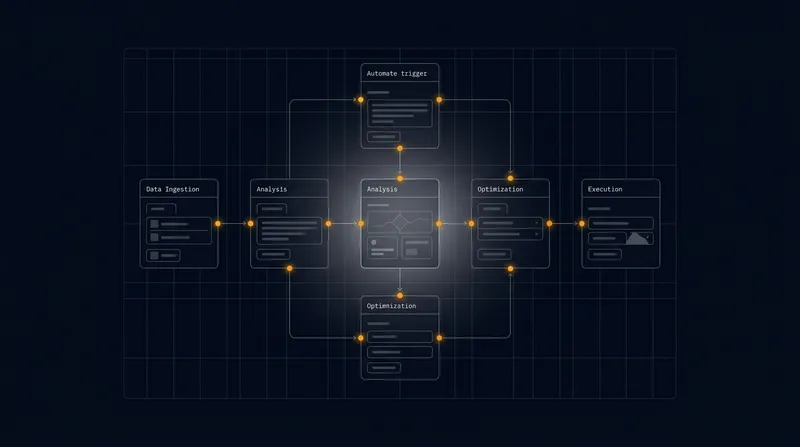
The technical components are distinct but integrated. Data integration platforms ensure that data from diverse sources - legacy systems, cloud applications, IoT devices, third-party APIs - flows into the insight system in real time. Data orchestration layers organize this flow, ensuring that related data from different sources arrives in coordinated fashion. The analytics engine itself operates on streaming data, updating models and scores continuously rather than recalculating them periodically. The prescription engine translates analytical insights into specific recommended actions, considering business constraints, policy rules, and current context. Finally, the execution layer connects these prescriptions to autonomous systems that can implement them without human intervention.
Data integration in 2026 requires architectures that support faster pipelines, cleaner governance, and more scalable integration of real-time streaming platforms with AI-driven analytics.
What makes this architecture prescriptive rather than merely predictive is the final step: the system doesn't just forecast what will happen, it recommends what should happen and connects that recommendation to action. This requires the prescription engine to incorporate business logic, constraint satisfaction, and outcome optimization. It's not enough to predict that a customer will churn; the system must prescribe the specific intervention that will prevent that churn while maximizing customer lifetime value and respecting the company's service capacity constraints.
The scalability challenge is significant. Traditional analytics systems might process millions of records daily; real-time prescriptive systems must process millions of events per second, generate prescriptions for each event, and route those prescriptions to appropriate execution systems. This requires cloud-scale infrastructure, distributed processing, and careful optimization of data flow and computation.
Organizations implementing these architectures discover that the technical complexity is manageable - cloud platforms now provide the underlying infrastructure - but the organizational complexity is greater. The architecture forces clarity about decision frameworks: what decisions should be made, what data should inform them, what constraints should govern them, and what outcomes should be optimized. Many organizations discover that they've never explicitly defined these frameworks because they've always been implicit in human decision-making.
Autonomous Execution: From Insights to Action
Real-time prescriptive insights have limited value if they remain insights. The transformation happens when prescriptions flow directly into autonomous execution systems that implement them without human intervention.
This is where the organizational impact becomes most visible and most challenging. Autonomous execution means that decisions previously made by humans - which customer service representative handles this call, whether this order should be expedited, what price should be quoted to this prospect, whether this equipment needs maintenance - are now made by systems operating within predefined parameters.
The fear that typically accompanies this transition is understandable: won't autonomous systems make mistakes? Won't they violate customer expectations or company values? Won't they eliminate jobs? The answer to each question is nuanced, but the pattern across organizations that have successfully implemented autonomous execution is consistent: systems designed with proper governance make fewer mistakes than humans, they operate more consistently with company values because values are explicitly coded into decision frameworks, and they eliminate routine decision-making while creating demand for higher-value human work.
Consider sales process automation. A traditional sales organization routes leads to representatives based on territory, availability, or manager assignment - a decision that's often made without complete information about the lead's specific needs or the representative's specific expertise. An autonomous execution system routes leads based on real-time insights about lead quality, propensity to buy, specific needs, and which representative has the highest historical close rate for similar leads. The result is higher conversion rates and more efficient use of sales resources.
In customer service, autonomous systems can handle routine inquiries - password resets, billing questions, order status checks - without human intervention, freeing service representatives to focus on complex issues that require judgment and empathy. The system escalates appropriately when it encounters situations outside its decision parameters, ensuring that human expertise is applied where it matters most.
In operations, autonomous systems can implement maintenance recommendations, adjust production parameters, manage inventory reordering, and coordinate with suppliers - all based on real-time insights about operational conditions. The system alerts humans when situations require judgment, but routine optimization happens continuously without waiting for human review.
Organizations that successfully implement autonomous execution discover that it doesn't eliminate decision-making - it redistributes it, removing routine decisions from humans and enabling them to focus on decisions that require judgment, creativity, and strategic thinking.
The key to successful autonomous execution is designing systems that operate transparently. When an autonomous system makes a decision, the organization should be able to explain why - what data was considered, what rules were applied, what constraints were satisfied. This transparency serves multiple purposes: it builds confidence in the system, it enables continuous improvement as humans review decisions and identify patterns, and it ensures compliance with regulatory requirements that increasingly demand explainability for automated decisions.
Measuring Impact: From Latency Reduction to Competitive Advantage
Organizations implementing real-time prescriptive insight loops need to measure impact in ways that capture the full scope of transformation, not just the narrow metrics that traditional analytics systems optimize for.
The most obvious metric is decision latency: the time between identifying a situation and taking action. Organizations implementing real-time insight loops typically see latency compression from hours or days to seconds or minutes. This metric matters because it directly correlates with operational outcomes - faster response to customer needs, faster correction of operational problems, faster exploitation of market opportunities.
But latency is only the beginning. The more important metrics are outcome metrics: customer retention improvement from faster intervention, revenue impact from faster exploitation of sales opportunities, cost reduction from prevented problems, employee satisfaction improvement from reduced firefighting and increased meaningful work.
Organizations should also measure the quality of autonomous decisions. What percentage of autonomous decisions produce the intended outcome? What percentage require human override? How do autonomous decisions compare to human decisions in the same situations? These metrics reveal whether the prescriptive insight system is actually improving decisions or just making them faster.
Organizational metrics matter too. Has decision-making distributed to lower levels of the organization? Are employees spending less time in meetings and approvals and more time on strategic work? Has the organization become more adaptive - able to adjust to changing conditions faster than before? Has employee satisfaction improved because people are freed from routine decision-making?
The most sophisticated organizations measure competitive positioning metrics: market share movement, win rate in competitive situations, customer acquisition cost, customer lifetime value, and employee retention. These metrics capture whether the real-time prescriptive insight implementation is actually delivering competitive advantage or just making existing operations marginally faster.
Implementation Pathways: Starting Real-Time Prescriptive Transformation
The most common mistake organizations make when implementing real-time prescriptive insights is trying to transform everything simultaneously. The successful approach is to identify high-impact, relatively contained use cases where real-time prescriptive insights can deliver measurable value, implement those cases with rigor, and then expand from that foundation.
High-impact use cases typically share several characteristics. First, they involve decisions that are made frequently - hundreds or thousands of times daily - because the value of latency compression multiplies with decision frequency. Second, they involve decisions where better information would clearly improve outcomes - customer service routing, sales lead prioritization, inventory optimization, equipment maintenance scheduling. Third, they involve decisions where autonomous execution is feasible - where the decision can be prescribed based on data and rules without requiring human judgment about context that the system can't see.
The implementation pathway typically follows a pattern. First, the organization maps the current decision process: what information is currently available, what decisions are made, who makes them, what outcomes result. Second, it designs the prescriptive insight framework: what additional data would improve decisions, what decision models would translate that data into prescriptions, what execution systems would implement those prescriptions. Third, it builds the technical infrastructure: data integration, streaming platforms, analytics engines, prescription engines, and execution connections. Fourth, it implements governance: defining which decisions can be autonomous, what constraints should guide them, how results should be monitored. Fifth, it pilots with real data and real decisions, monitoring outcomes carefully. Sixth, it expands to full production, monitoring continuously for drift or degradation in decision quality.
Throughout this pathway, the organization is learning what it means to operate with real-time prescriptive insights. Teams discover that they need to think differently about data - not as a resource for periodic analysis but as a continuous feed that informs ongoing decisions. They discover that decision-making requires explicit frameworks - what factors matter, how they should be weighted, what constraints should apply - because these frameworks must be coded into systems. They discover that governance is not a constraint on autonomous execution but an enabler of it, allowing them to move faster with more confidence.
Overcoming Implementation Challenges and Organizational Resistance
Real-time prescriptive insight implementations face predictable organizational challenges that must be addressed directly rather than hoped away.
The first challenge is cultural. Organizations have evolved over decades to value human decision-making and to structure authority around decision rights. Real-time prescriptive insights challenge this by suggesting that data-driven prescriptions should guide decisions more than human intuition. This creates anxiety, particularly among experienced decision-makers who worry that their expertise is being devalued. The solution is to reframe the role of human judgment: not as the primary decision-maker but as the designer of decision frameworks. Experienced leaders should be excited to formalize their expertise into decision models that execute consistently at scale, rather than being threatened by it.
The second challenge is technical. Building real-time prescriptive insight systems requires different skills than traditional analytics. The organization needs expertise in streaming data architecture, real-time analytics, decision modeling, and autonomous execution. Many organizations lack this expertise internally and must either build it or partner with external expertise. The risk is that building this capability takes longer and costs more than expected, delaying value realization and creating skepticism about the investment.
The third challenge is governance. Organizations must define which decisions can be made autonomously and which require human approval, what constraints should guide autonomous decisions, and how to monitor outcomes for drift or degradation. Getting this right requires cross-functional collaboration - business leaders, compliance officers, technology leaders, and operational leaders all have a stake in the governance framework. The temptation is to make governance so restrictive that autonomous execution becomes impossible; the opposite temptation is to make it so loose that autonomous systems make decisions that violate company values. The successful approach is to start with clear governance, monitor outcomes carefully, and adjust parameters based on what you learn.
The fourth challenge is change management. Real-time prescriptive insights change how work gets done, which is inherently disruptive. Employees whose roles have traditionally involved making decisions now have to think about their roles differently. Managers whose authority has traditionally come from decision-making have to find authority in designing decision frameworks and managing exceptions. This requires explicit change management: clear communication about why the change is happening, what it means for different roles, how success will be measured, and what support is available for people navigating the transition.
Organizations that successfully overcome implementation challenges typically share a commitment to moving incrementally - starting with high-impact use cases, learning from them, and expanding from that foundation rather than trying to transform everything simultaneously.
The Future of Enterprise Operations: Real-Time, Prescriptive, and Autonomous
The rise of real-time prescriptive insights represents a fundamental shift in how enterprises operate. We're transitioning from organizations structured around human decision-making to organizations structured around continuous optimization. This transition is not about eliminating human judgment; it's about redistributing it - removing humans from routine decision-making where data can guide prescriptions and enabling them to focus on strategic decisions where judgment matters most.
The competitive implications are significant. Organizations that master real-time insight loops will operate faster, more consistently, and more adaptively than competitors still operating on traditional decision cycles. This advantage will compound over time, creating widening performance gaps that become difficult to close without fundamental restructuring.
The organizational implications are equally significant. Hierarchies flatten because escalation becomes unnecessary when decisions are guided by prescriptions validated against policy and constraints. Decision-making distributes to lower levels of the organization because systems can make routine decisions autonomously while humans focus on exceptions and strategy. Work becomes more meaningful because people are freed from routine decision-making and can focus on problems that require creativity and judgment.
The technical implications are clear: real-time prescriptive insight systems require different architectures, different skills, and different governance than traditional analytics systems. But the underlying technology is increasingly accessible - cloud platforms provide the infrastructure, open-source tools provide the components, and managed services reduce the burden of building and maintaining these systems.
The organizations that will thrive in the next decade are not those with the most data - data is increasingly commoditized - but those that can translate data into prescriptions faster than competitors and execute those prescriptions autonomously at scale. Real-time prescriptive insights are the foundation for this capability.
Getting Started with Real-Time Prescriptive Insight Implementation
If your organization recognizes the competitive imperative of real-time prescriptive insights but isn't sure where to start, the path forward involves several concrete steps.
First, assess your current decision landscape. Map the high-frequency, high-impact decisions that your organization makes. Which of these decisions would benefit from faster execution? Which ones have clear decision criteria that could be formalized into prescriptive models? Which ones involve autonomous execution systems that could implement prescriptions? This assessment identifies your highest-impact use cases.
Second, evaluate your current data and technical infrastructure. What data is currently available in real time? What data would need to be integrated to support prescriptive insights? What systems are in place to process data and execute decisions? This evaluation identifies the technical work required to support your use cases.
Third, engage with a partner who understands both the business and technical dimensions of real-time prescriptive insight implementation. This is not a project you should undertake alone - the complexity spans business process design, data architecture, analytics modeling, governance design, and organizational change management. The right partner brings experience with each dimension and can guide you through the inevitable challenges that emerge.
Fourth, commit to starting with a focused pilot. Choose one high-impact use case, implement it with rigor, measure outcomes carefully, and use what you learn to inform broader implementation. This approach reduces risk, builds organizational confidence, and creates a foundation for expansion.
At A.I. PRIME, we specialize in exactly this work. We help mid to large enterprises design and implement real-time prescriptive insight systems that compress decision latency, enable autonomous execution, and drive competitive advantage. We bring expertise in workflow design, data orchestration, autonomous agent deployment, and governance integration - the full stack required for successful implementation. We've worked with organizations across industries - financial services, healthcare, manufacturing, retail, telecommunications - and we understand the specific challenges each industry faces.
More importantly, we understand that real-time prescriptive insights are not just a technology implementation - they're an organizational transformation. We work with your leadership team to define what prescriptive decision-making means for your organization, design the governance frameworks that enable autonomous execution, build the technical infrastructure that supports real-time insights, and guide your teams through the change management required to operate differently.
The competitive window for real-time prescriptive insight implementation is open now. Organizations that implement these capabilities in the next 12 to 24 months will establish a sustainable competitive advantage. Those that wait will find themselves perpetually behind, reacting to conditions that faster organizations have already addressed. The question is not whether to invest in real-time prescriptive insights - the question is when and how to do it right. We're ready to help you answer that question and execute on the answer. Let's explore how real-time prescriptive insight loops can transform your organization's competitive positioning and operational effectiveness.


Conclusion
Real-time prescriptive insights represent a fundamental shift in how enterprises operate. By moving beyond reactive analytics and predictive modeling to autonomous decision-making, organizations can compress decision cycles, reduce human error, and capitalize on opportunities at machine speed. The competitive advantage isn't in having the data - it's in acting on it before your competitors even recognize the opportunity exists.
The path forward requires commitment across four critical dimensions: clear governance frameworks that define autonomous decision boundaries, robust data infrastructure that enables real-time processing, organizational readiness to embrace new decision-making paradigms, and partnership with experts who understand the full implementation landscape. This isn't a technology project - it's a business transformation that touches strategy, operations, and culture.
The organizations leading their industries today are those that recognized this shift early and invested accordingly. They've compressed decision latency from hours to milliseconds, moved from reactive to prescriptive operations, and built sustainable competitive moats through superior decision-making velocity. The window of opportunity remains open, but it won't stay that way indefinitely.
If your organization is ready to explore how real-time prescriptive insights can transform your competitive positioning, we're here to help. The question isn't whether to implement these capabilities - it's how quickly you can do it right. Your next competitive advantage is waiting in the real-time data flowing through your systems right now. The time to act is today.
Next step
Book the Opportunity Sprint