A.I. PRIME - Article
From Systems of Record to Systems of Action: Reimagining ERP with AI Orchestration
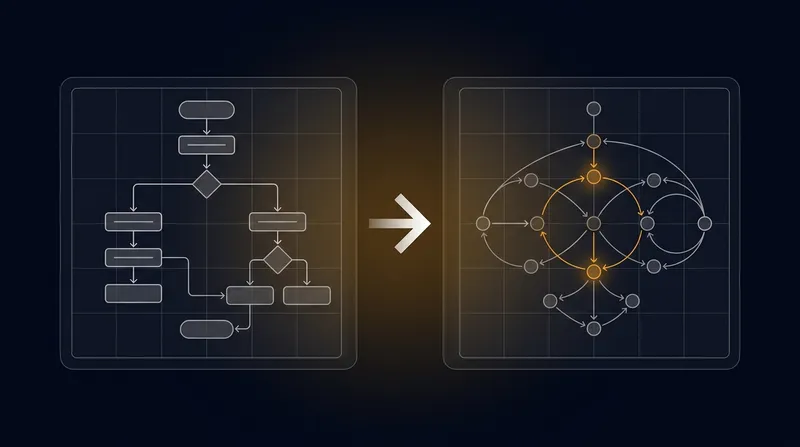
Discover how applied AI technologies transform enterprise operations from reactive systems of record into intelligent systems of action.
Enterprise Resource Planning systems have long served as the backbone of organizational operations - reliable repositories of historical data, transactional records, and business intelligence. Yet in an era where market conditions shift in real-time and customer expectations demand immediate responses, traditional ERPs face a fundamental limitation: they excel at recording what happened, not at enabling what should happen next. This gap between retrospective insight and proactive action represents one of the most pressing operational challenges facing mid to large enterprises today. The question isn't whether your ERP works - it's whether it can evolve into a true system of action that drives real-time decision-making and operational resilience. Applied AI technologies, particularly orchestration layers that sit atop legacy systems, are fundamentally transforming how enterprises convert static data warehouses into dynamic engines of competitive advantage. By bridging the gap between systems of record and systems of action, AI-driven orchestration enables organizations to move from reactive problem-solving to predictive intervention, from delayed insights to instantaneous decision-making, and from siloed workflows to seamlessly coordinated operations.
The Evolution From Systems of Record to Systems of Action
For decades, the primary mandate of enterprise systems was clear: capture, store, and retrieve data with accuracy and consistency. Systems of record - your ERP, data warehouses, and transactional databases - fulfilled this mission admirably. They provided audit trails, enabled regulatory compliance, and offered historical perspectives that informed quarterly business reviews and annual planning cycles. However, this orientation toward the past created a structural blind spot in organizational responsiveness. Learn more in our post on Custom Integrations: Connect Agentic AI to Legacy Systems Without Disruption.
A systems-of-record approach treats data as a static asset to be preserved and analyzed retrospectively. When a supply chain disruption occurs, you discover it through variance reports days or weeks later. When customer churn signals emerge, they appear in monthly dashboards. When cash flow pressures build, finance teams identify them during forecasting cycles. The insights exist within your systems, but the temporal lag between occurrence and awareness prevents timely intervention.
Systems of action, by contrast, are designed around the principle of real-time responsiveness. They continuously monitor operational streams, detect anomalies as they emerge, and trigger coordinated responses without human intervention. Instead of waiting for a quarterly business review to discuss supply chain resilience, a system of action identifies supplier risk in real-time and automatically initiates contingency protocols. Rather than discovering customer dissatisfaction through post-transaction surveys, it detects sentiment shifts during interactions and routes customers to specialized support before they consider alternatives.
The fundamental difference isn't technological - it's philosophical. Systems of record ask "What happened?" Systems of action ask "What should we do about it, and how do we do it now?"
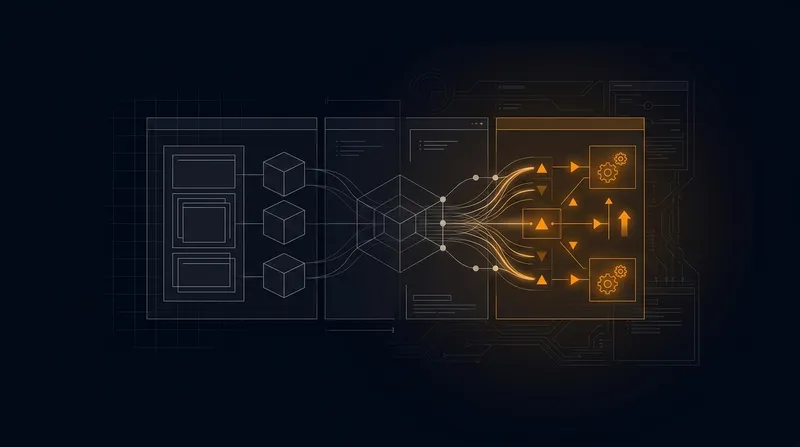
The transition from one paradigm to the other requires more than incremental software upgrades. It demands a new architectural layer - an orchestration engine that sits between your existing systems and your operational processes, translating latent insights into immediate actions. This is where applied AI technologies become indispensable. AI orchestration layers don't replace your ERP; they amplify it by adding real-time intelligence, autonomous decision-making, and coordinated workflow execution that legacy systems simply weren't designed to provide.
AI Orchestration: The Bridge Between Data and Decision-Making
At its core, AI orchestration is the art and science of connecting intelligent agents, data streams, and business processes into a unified system that thinks, decides, and acts autonomously. Unlike traditional middleware or integration platforms that merely move data between systems, orchestration layers actively interpret information, apply business logic, and coordinate multi-step responses across your entire operational ecosystem. Learn more in our post on Data Orchestration Best Practices to Power Predictive Scoring Loops.
Consider the architecture: Your ERP contains the definitive record of inventory levels, supplier relationships, and historical demand patterns. Your CRM holds customer interaction history and satisfaction metrics. Your financial systems track cash position and working capital metrics. Individually, each system provides valuable context. Connected through an AI orchestration layer, they become components of an intelligent organism capable of understanding complex, multi-dimensional operational challenges and responding with coordinated precision.
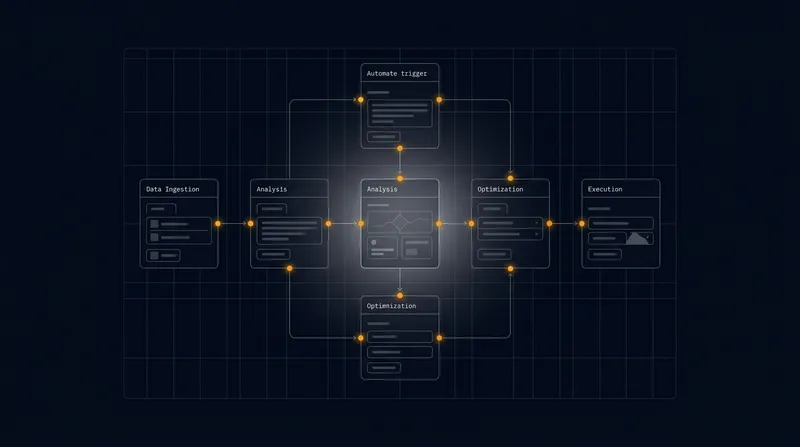
The orchestration layer operates through several key mechanisms. First, it establishes real-time data feeds from your systems of record, creating a continuously updated operational picture rather than point-in-time snapshots. Second, it applies machine learning models trained on historical patterns to detect anomalies and emerging conditions before they become critical. Third, it maintains a library of playbooks - pre-configured response sequences that can be triggered autonomously when specific conditions are detected. Fourth, it coordinates execution across systems, ensuring that actions taken in one domain don't create unintended consequences in another.
The most valuable orchestration layers don't just automate existing processes - they enable entirely new operational capabilities that were previously impossible due to speed or complexity constraints.
What distinguishes modern AI orchestration from earlier automation approaches is the incorporation of cognitive capabilities. Rather than executing rigid if-then logic, orchestration engines leverage natural language processing, predictive analytics, and adaptive learning to handle ambiguous situations, learn from outcomes, and continuously refine their decision-making. This means your orchestration layer improves with every decision it makes, becoming progressively more effective at navigating the unique complexities of your business.
The governance dimension is equally critical. Enterprise decision-makers rightfully demand transparency, auditability, and control over autonomous systems. Modern orchestration platforms integrate governance frameworks that provide real-time visibility into AI decision-making, establish guardrails that prevent actions outside defined parameters, and maintain complete audit trails for compliance purposes. This balance between autonomy and oversight is what enables organizations to confidently deploy AI across mission-critical operations.

Supply Chain Transformation: From Reactive to Predictive
Supply chain management exemplifies the power of converting systems of record into systems of action. Traditional supply chain operations rely heavily on periodic reviews, demand forecasts generated monthly or quarterly, and reactive responses to disruptions. This approach worked adequately in stable environments, but modern supply chains face unprecedented volatility - geopolitical tensions, climate impacts, pandemic-related disruptions, and rapidly shifting consumer preferences create conditions where yesterday's forecasts become obsolete within days. Learn more in our post on Predictive Scoring Loops to Prioritize Cases and Reduce MTTR.
An AI-orchestrated supply chain operates fundamentally differently. Real-time feeds from supplier systems, logistics networks, and customer demand signals flow continuously into the orchestration layer. Machine learning models trained on historical patterns, external data sources, and real-time market conditions generate dynamic demand forecasts that update hourly rather than monthly. When these forecasts detect emerging misalignments between predicted demand and current inventory positioning, the system doesn't wait for a planner to notice the variance - it initiates a coordinated response.
Consider a practical scenario: A consumer goods manufacturer detects through real-time point-of-sale data that demand for a seasonal product is accelerating 40 percent faster than forecast. Simultaneously, its AI orchestration layer identifies that a key supplier is experiencing production delays due to unexpected equipment failure. In a traditional environment, this situation would unfold over days: demand planners would notice the variance, escalate to procurement, procurement would contact suppliers, suppliers would provide updates, and planners would scramble to adjust orders and safety stock. By then, stock-outs would already be occurring in retail channels.
The AI-orchestrated alternative unfolds in minutes. The system detects the demand acceleration and supplier constraint simultaneously. It automatically evaluates alternative suppliers, calculates the cost-benefit of expedited shipping versus accepting temporary stock-outs, and considers the impact on cash flow and working capital. Based on pre-configured decision rules aligned with business strategy, it executes the optimal response: perhaps placing expedited orders with secondary suppliers, adjusting logistics routing to prioritize high-demand regions, and communicating proactively with key retail partners about temporary allocation. The system also updates demand forecasts across the network, ensuring that related products and downstream operations adjust their planning accordingly.
Supply chain resilience isn't about eliminating disruptions - it's about detecting them early enough to respond before they cascade into operational crises.
The financial impact is substantial. Organizations implementing AI orchestration in supply chain operations typically see reductions in inventory carrying costs of 15-25 percent through more accurate demand sensing, improvements in on-time delivery rates of 10-20 percent through dynamic optimization, and reductions in supply chain disruption costs of 30-40 percent through proactive risk management. Beyond these direct metrics, the strategic advantage of supply chain agility becomes a competitive differentiator - the ability to respond faster than competitors to market shifts creates opportunities that rigid, reactive supply chains simply cannot capture.
The implementation approach matters significantly. Rather than attempting to replace existing ERP and supply chain planning systems, successful orchestration deployments enhance these systems by adding a real-time intelligence layer. This preserves the substantial investments organizations have made in their systems of record while dramatically expanding their operational capabilities. The orchestration layer acts as an intelligent intermediary, translating strategic business objectives into coordinated operational actions while maintaining the data integrity and compliance requirements that ERP systems provide.
Financial Operations: Real-Time Visibility and Proactive Risk Management
Finance departments operate under constraints that make them particularly well-suited for AI orchestration benefits. Financial operations must balance multiple competing objectives: maintain accurate reporting and compliance, optimize working capital, manage cash flow, and support strategic decision-making. These objectives often exist in tension - conservative approaches to working capital reduce financial flexibility, while aggressive optimization creates vulnerability to disruption. Traditional finance operations manage this tension through periodic reviews and manual interventions, creating delays that can be costly in volatile conditions.
AI orchestration transforms financial operations by enabling real-time visibility into cash position, working capital metrics, and financial risk indicators. Rather than discovering cash flow pressures during monthly close processes, CFOs and treasurers see emerging pressures as they develop and can take preventive action. Rather than learning about customer payment delays through aging reports, the system flags payment risk in real-time and coordinates collection efforts or adjusts credit terms proactively.
A practical example illustrates the impact: A mid-market manufacturing company implements AI orchestration across its order-to-cash process. Previously, the company discovered customer credit risk primarily through aging reports - identifying customers with 60+ day outstanding invoices and then escalating collection efforts. By this point, relationships were often strained and collection success rates were low.
The orchestrated order-to-cash process operates differently. As orders are placed, the system evaluates customer credit quality using real-time financial data, payment history, and external credit indicators. For customers showing elevated risk, it adjusts payment terms automatically - perhaps requiring deposits for large orders or shortening payment windows. As orders are fulfilled and invoices issued, the system monitors payment patterns. If a customer begins paying more slowly than historical norms, the system flags the change and initiates early intervention - perhaps offering early payment discounts or proactively contacting the customer to understand any issues.
The result is a dramatic improvement in days sales outstanding (DSO) and cash conversion cycle. By detecting and addressing payment risk before it becomes a collection problem, the company reduces DSO by 8-12 days on average, which for a company with $50 million in annual revenue translates to $1-2 million in improved cash availability. This improvement compounds: better cash position reduces financing costs, improves financial flexibility, and enables investment in growth initiatives that would otherwise be constrained by working capital limitations.
In financial operations, the difference between discovering a problem and preventing it is often measured in millions of dollars of freed working capital and reduced financial risk.
Beyond order-to-cash, AI orchestration extends throughout financial operations. In accounts payable, orchestration layers optimize payment timing to maximize early payment discounts while preserving cash position. They detect duplicate invoices, coding errors, and compliance exceptions automatically, reducing the manual effort required for AP processing. In financial planning and analysis, orchestration enables continuous forecasting that updates as new data arrives, rather than quarterly forecasts that become stale within weeks. In tax and compliance, orchestration monitors transactions and prepares documentation proactively, reducing the manual effort required for audit preparation and regulatory reporting.
The governance dimension becomes particularly important in financial operations, where regulatory requirements and audit trails are non-negotiable. Modern orchestration platforms maintain complete visibility into financial decisions made by autonomous systems, provide explanations for why specific actions were taken, and ensure that all decisions comply with established policies and regulatory requirements. This combination of autonomy and oversight enables finance teams to confidently deploy AI across operations while maintaining the control and auditability that stakeholders require.

Customer Operations: From Reactive Support to Proactive Engagement
Customer-facing operations represent perhaps the most immediate opportunity for converting systems of record into systems of action. Traditional customer service models rely on customers initiating contact when they have problems, at which point support teams respond. This reactive approach has inherent limitations: customers experience friction before resolution, satisfaction suffers, and the organization only becomes aware of issues after they've already impacted the customer experience.
AI orchestration enables a fundamentally different customer engagement model. By continuously monitoring customer interactions, transaction patterns, and engagement signals, orchestration layers can detect satisfaction risks before customers formally complain and initiate proactive outreach. By analyzing customer history and current context, they can route inquiries to the most appropriate agent or resolution path, reducing resolution time and improving first-contact resolution rates.
Consider a telecommunications company implementing AI orchestration across customer operations. The system continuously monitors several data streams: billing patterns, service quality metrics, support ticket history, and customer interaction sentiment. When a customer's usage patterns change significantly - perhaps dropping by 30 percent - the system recognizes this as a potential churn signal. Rather than waiting for the customer to call to cancel service, the system automatically initiates a proactive outreach sequence: a personalized message offering assistance, perhaps a service adjustment or promotional offer designed to address the likely underlying issue.
The orchestration layer coordinates this outreach across channels: if the customer typically responds to email, it sends a personalized email; if they prefer phone contact, it queues them for a callback from a specialist trained in retention. The system provides the agent with complete context: the customer's service history, the likely reason for usage decline, relevant service options, and authority to offer specific incentives. This combination of proactive initiation and well-informed engagement dramatically improves retention outcomes.
The impact extends beyond retention. By detecting issues proactively, the company reduces support volume for reactive problem-solving, freeing support teams to focus on complex issues and strategic customer relationships. By routing interactions intelligently, it improves first-contact resolution rates and reduces average handling time. By providing agents with complete context and decision authority, it improves customer satisfaction and reduces escalation rates.
The most valuable customer operations insight is often not what customers tell you - it's what their behavior patterns reveal before they consciously recognize a problem themselves.
Sales and customer success operations benefit similarly from orchestration. Rather than relying on periodic sales reviews to identify at-risk accounts or cross-sell opportunities, orchestration layers continuously monitor account health indicators and identify opportunities in real-time. When a customer's usage of a product is declining, the system alerts the account manager and suggests relevant training or support interventions. When a customer's business is growing, the system identifies expansion opportunities and routes them to the sales team with complete context about the customer's needs and buying patterns.
The orchestration layer also coordinates the customer journey across touchpoints. When a prospect downloads a whitepaper, the system recognizes this as a buying signal and coordinates follow-up across email, sales outreach, and relevant content recommendations. When a customer completes a purchase, the system initiates an onboarding sequence designed to drive adoption and satisfaction. When a customer reaches a milestone in their journey - perhaps using the product for the first time, completing their first significant transaction, or reaching a usage threshold - the system triggers relevant engagement designed to reinforce value and prevent churn.
The sophistication of modern orchestration enables highly personalized customer engagement at scale. Rather than generic email campaigns or one-size-fits-all support processes, each customer receives engagement tailored to their specific context, preferences, and needs. This personalization drives measurably better outcomes: higher engagement rates, improved satisfaction scores, and stronger customer lifetime value.
Overcoming Implementation Challenges and Building Organizational Readiness
The transition from systems of record to systems of action requires more than technology deployment - it demands organizational transformation. Many enterprises struggle with implementation because they underestimate the change management dimension or attempt to deploy orchestration without addressing underlying process and governance challenges.
The first critical challenge is data readiness. AI orchestration depends on access to clean, timely, well-integrated data from across your systems of record. Many organizations discover that their data infrastructure isn't prepared for this requirement: data quality issues that were acceptable for periodic reporting become problematic for real-time decision-making; data integration approaches that worked for batch processing can't support continuous feeds; data governance frameworks that were designed for human-reviewed analytics must evolve to support autonomous decision-making.
Successful implementations begin with a comprehensive data audit that identifies quality issues, integration gaps, and governance gaps. Rather than attempting to resolve all issues before deploying orchestration, effective approaches prioritize: identify the highest-value use cases, ensure data quality for those specific use cases, and then expand progressively as data infrastructure matures. This phased approach allows organizations to realize value early while building the foundation for broader deployment.
The second challenge is process redesign. Many organizations attempt to implement orchestration by automating existing processes, but optimal orchestration often requires reimagining processes to take advantage of new capabilities. A supply chain process designed for monthly demand planning cycles requires fundamental redesign to operate with real-time demand sensing. A customer service process designed around agent-initiated problem resolution must evolve to support proactive engagement. This redesign work is often underestimated, yet it's critical to realizing the full value of orchestration.
Successful implementations engage process owners early and deeply in redesign work. Rather than having technology teams impose solutions, effective approaches involve process owners in envisioning how orchestration could fundamentally improve their domain. This collaborative approach surfaces constraints and opportunities that purely technical perspectives might miss, and it builds ownership and commitment that's essential for successful change management.
The technology enables transformation, but the organization determines whether transformation actually occurs. Change management is not an afterthought - it's a core component of implementation strategy.
The third challenge is governance and control. Enterprise leaders rightfully demand visibility and control over autonomous systems, particularly when they make decisions that impact customers, finances, or compliance. Yet overly restrictive governance can eliminate the speed benefits that make orchestration valuable - if every autonomous decision must be reviewed by a human before execution, you haven't truly created a system of action.
The solution lies in tiered governance frameworks that provide appropriate oversight based on decision risk. Low-risk decisions with clear precedent and minimal downside might execute fully autonomously with post-execution monitoring. Medium-risk decisions might require pre-execution approval from a system or person, but with streamlined workflows that don't create bottlenecks. High-risk decisions might require human judgment, but with orchestration providing complete context and recommendations to accelerate decision-making. This approach maintains necessary control while preserving the speed and responsiveness that make orchestration valuable.
The fourth challenge is organizational culture and capability. Successfully deploying orchestration requires that organizations embrace a different mindset about how work gets done. Rather than humans making most decisions with technology providing support, orchestration inverts this relationship - technology makes most decisions with humans providing oversight and handling exceptions. This shift can feel threatening to employees whose value has traditionally been measured by their decision-making authority.
Successful implementations address this by reframing how value is created. Rather than reducing headcount through automation, effective orchestration deployments redeploy people from routine decision-making toward higher-value activities: strategic planning, customer relationship management, complex problem-solving, and innovation. This reframing requires clear communication from leadership about how the organization will evolve, investment in training and capability development, and genuine commitment to redeploying rather than reducing headcount. Organizations that make this commitment successfully find that orchestration enables productivity improvements that create opportunities for growth and advancement.
Building Your Orchestration Strategy: Practical Steps Forward
Implementing AI orchestration is not an all-or-nothing proposition. Successful organizations approach it as a progressive journey that begins with high-value use cases and expands as capability and confidence grow. This section provides practical guidance for designing your orchestration strategy.
The first step is to identify your highest-value orchestration opportunities. These typically share several characteristics: they involve frequent decisions that follow patterns, they have measurable business impact, they involve multiple systems or processes that need coordination, and they suffer from latency or quality issues in current approaches. Supply chain optimization, order-to-cash automation, and customer risk detection are often high-value starting points, but the optimal opportunities for your organization depend on your specific business model, competitive dynamics, and operational challenges.
To identify opportunities systematically, conduct a comprehensive operational assessment that examines your key business processes through the lens of orchestration potential. For each process, evaluate: How frequently are decisions made? How much latency exists between when conditions change and when decisions are made? How much value could be captured through faster or better decisions? How complex are the decisions - do they involve multiple data sources and business rules? How much coordination is required across systems or teams? Processes that score highly on these dimensions are strong candidates for orchestration investment.
The second step is to design your orchestration architecture. This involves several decisions: Which systems of record will feed data to your orchestration layer? Which business processes will be orchestrated? What decision-making capabilities does the orchestration layer need? What governance frameworks will control autonomous decision-making? What organizational roles and responsibilities will support orchestration operations? These architectural decisions should be made collaboratively, involving IT, business process owners, risk and compliance, and leadership.
The third step is to establish your governance framework before deploying orchestration. Define what types of decisions can be made autonomously, what decisions require human approval, and what decisions are outside the scope of automation. Establish monitoring and alerting that provides visibility into orchestration decisions. Define escalation procedures for exceptions and anomalies. Create audit trails that document all decisions and provide explanations for why specific actions were taken. This governance framework should evolve as you gain confidence in your orchestration capabilities, but establishing it proactively prevents governance issues from derailing deployment.
The fourth step is to invest in data quality and integration. Orchestration depends on access to clean, timely data from multiple sources. Assess your current data quality, identify the most critical quality issues, and address them before deployment. Establish data feeds that provide real-time or near-real-time data from your systems of record. Implement data governance practices that maintain quality as data volumes and complexity increase. This data foundation is critical - orchestration built on poor data quality will make poor decisions, regardless of how sophisticated the AI algorithms are.
The fifth step is to design your change management approach. Identify the organizational groups that will be affected by orchestration. Communicate clearly about how their roles will evolve. Invest in training and capability development. Create feedback mechanisms that allow employees to raise concerns and suggestions. Celebrate early wins and progress. Acknowledge that organizational change is challenging and provide support for people navigating it. The technology is the easy part - organizational transformation is where most implementations succeed or fail.
The sixth step is to establish metrics and accountability for orchestration outcomes. Define what success looks like for your orchestration initiative: improved financial metrics, operational efficiency gains, customer satisfaction improvements, or risk reduction. Establish baselines before deployment so you can measure impact. Create dashboards that track progress toward goals. Hold teams accountable for outcomes, not just for deploying technology. This focus on outcomes ensures that orchestration investments drive genuine business value rather than becoming technology for its own sake.
The Future of AI-Orchestrated Enterprise Operations
As applied AI technologies continue to advance, the capabilities of orchestration layers will expand significantly. Current implementations focus primarily on automating well-defined processes and coordinating across existing systems. Future implementations will incorporate more sophisticated reasoning, handle increasingly ambiguous situations, and actively learn from outcomes to continuously improve decision quality.
The integration of large language models into orchestration platforms will enable more natural interaction between humans and systems, making it easier for business users to define orchestration logic and easier for orchestration systems to explain their reasoning. This democratization of orchestration capability will accelerate adoption and enable broader organizational participation in designing how orchestration should work.
The emergence of more sophisticated causal reasoning and simulation capabilities will enable orchestration systems to not just predict what will happen, but to understand why things happen and to simulate the impact of different decisions before executing them. This will enable orchestration to handle increasingly complex, multi-variable decisions that currently require human judgment.
The evolution of federated learning and privacy-preserving AI will enable organizations to benefit from orchestration insights across their ecosystem - collaborating with suppliers, customers, and partners to optimize shared outcomes without compromising proprietary information. This will unlock new levels of supply chain coordination and customer experience optimization.
The organizations that will thrive in the coming decade will be those that successfully convert their systems of record into systems of action - using applied AI technologies to move from reactive problem-solving to proactive value creation.
However, these technological advances will only create value if organizations have built the foundation for orchestration: clean, well-integrated data; clearly defined processes and decision rules; governance frameworks that balance autonomy with oversight; and organizational cultures that embrace continuous change and learning. The technology is necessary but not sufficient - organizational readiness is equally important.
Conclusion: Your Path to Orchestrated Operations
The transition from systems of record to systems of action represents a fundamental shift in how organizations operate. Rather than treating enterprise systems as passive repositories of historical data, orchestration layers transform them into active engines of competitive advantage - continuously monitoring conditions, detecting opportunities and risks, and coordinating responses across your entire operational ecosystem.
The business case is compelling. Organizations that successfully implement AI orchestration see measurable improvements across every operational domain: supply chains become more resilient and efficient, financial operations improve working capital and reduce risk, customer operations become more proactive and personalized, and decision-making accelerates dramatically. These improvements compound over time as orchestration systems learn from experience and organizational processes evolve to take full advantage of new capabilities.
Yet the opportunity is time-limited. As applied AI technologies mature and become more accessible, orchestration will increasingly become table stakes rather than competitive advantage. Organizations that delay implementation will find themselves at a disadvantage relative to competitors who have already built the organizational capabilities, data foundations, and governance frameworks required for orchestration success. The question isn't whether to implement orchestration - it's when and how to do it effectively.
At A.I. PRIME, we specialize in helping mid to large enterprises navigate this transformation. Our approach combines deep expertise in applied AI technologies with practical understanding of how to drive organizational change. We begin by assessing your current state - your systems, your processes, your data capabilities, and your organizational readiness. We then work with you to design an orchestration strategy tailored to your specific business model, competitive dynamics, and organizational context.
Our AI consulting services help you identify high-value orchestration opportunities and design solutions that deliver measurable business impact. Our workflow design expertise ensures that orchestration is built into processes from the ground up, rather than attempting to retrofit automation into existing workflows. Our automation blueprinting provides the detailed technical specifications required for successful implementation. Our agent network deployment ensures that your orchestration systems are robust, scalable, and continuously learning. Our governance integration maintains the oversight and control that enterprise leaders require while preserving the speed and responsiveness that make orchestration valuable.
Most importantly, we understand that technology is only part of the equation. We invest heavily in change management, organizational capability development, and helping your teams understand how their roles will evolve in an orchestrated operating model. We track ROI rigorously, ensuring that orchestration investments drive genuine business value. We provide continuous enablement support, ensuring that your organization can evolve your orchestration capabilities as business conditions change and new opportunities emerge.
If you're ready to explore how AI orchestration could transform your operations, we'd welcome the opportunity to discuss your specific situation. We can help you identify where orchestration could create the most value, design an implementation approach that fits your organizational context, and build the capabilities required for sustained success. The future of enterprise operations is orchestrated, intelligent, and proactive. The question is whether you'll lead that transformation or follow. Contact us today to start your journey from systems of record to systems of action.
Next step
Book the Opportunity Sprint